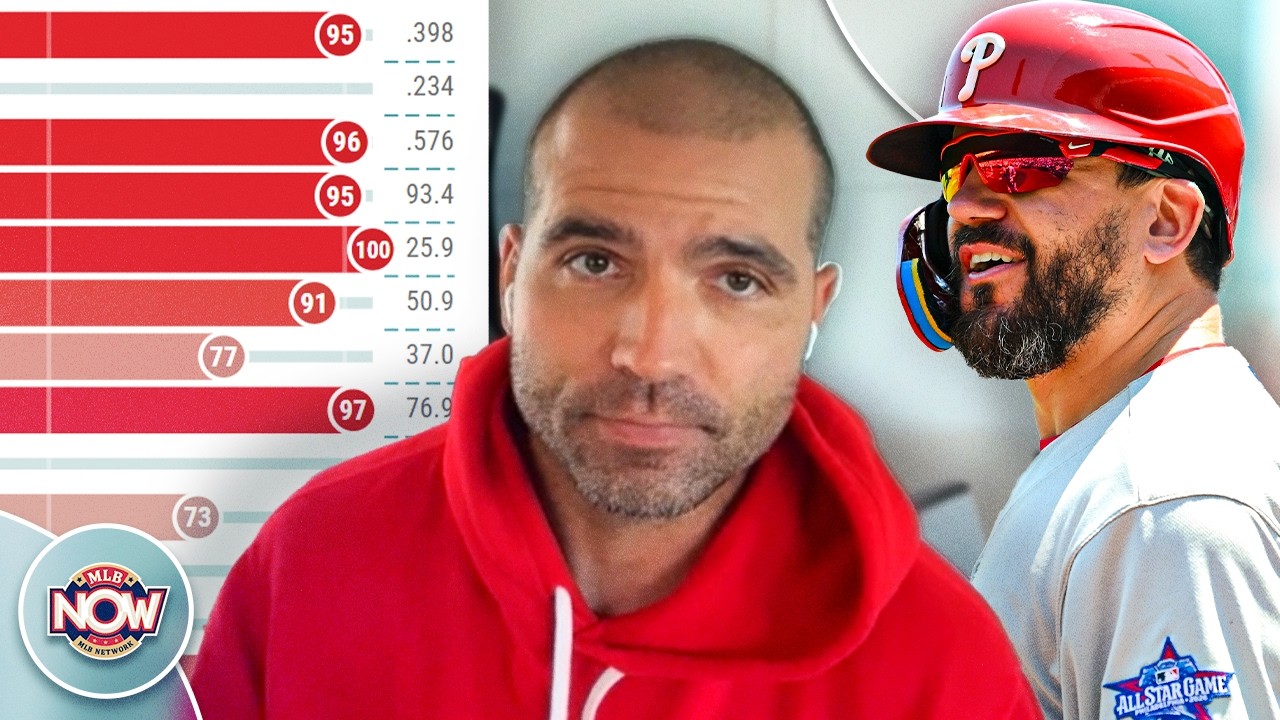
Kyle Schwarber's age-33 season has been so good that it has rewritten the league's scouting reports against him in real time. Few people are better positioned to spot the shift than Joey Votto, whose Honors Class segment with MLB Network's Brian Kenny detailed exactly how the Phillies slugger has weaponised plate discipline into a tactical advantage at an age when most hitters are managing decline.
Votto's case in point was a recent Phillies-Pirates series. "I don't know if you observed him against the Pirates," Votto told Kenny. "I mean, he homered twice and then all of a sudden they fired zero fastballs. He got no fastballs for a stretch of time."
The reason, Votto explained, is that pitchers run out of usable options against Schwarber once the standard punch-out script has failed. "To answer your question, I think that's just his skill set," Votto said. "He has the ability to get as deep into a count and stretch a count out as long as he wants."

The practical effect is the kind that pitching coaches dread. A hitter capable of patiently watching his way to a 3-1 count, while also possessing the raw bat speed to punish a hangable secondary pitch, forces an opposing battery into a permanently defensive crouch. The fastball — the most reliable strike pitch in baseball — becomes the most dangerous pitch to deliver to him.
Votto's verdict on the standoff was where the segment moved from analysis to admiration. "He feels like to me like one of those guys that I'll take you to the 15th round and still knock you out," he said. The boxing metaphor was deliberate. Schwarber's approach, as Votto laid it out, is not about ambushing the first strike or sitting fastball first-pitch. It is about wearing pitchers down, drawing them off their preferred sequencing, and either walking off the plate with on-base value or extending a count until the eventual mistake comes.
The statistical evidence is on Votto's side. Schwarber leads the National League in slugging at .624 and is on what Votto framed as a 60-homer pace. The remarkable detail is that he has done this while striking out at a rate that would, in another era, have been treated as a disqualifying flaw. The modern run-environment, with home runs counted heavier than strikeouts, has flipped the equation. Schwarber's profile — light contact rates but pulverising power on the contact he does make — is the optimal modern slugger build, and at 33 he has finally collected its full expression.
For opposing managers, the only remaining question is how much fastball to gamble on. Votto's read is unsentimental. The pitchers Schwarber has faced so far this season have already answered the question. They are not throwing him fastballs. And Schwarber, in the meantime, keeps homering anyway.