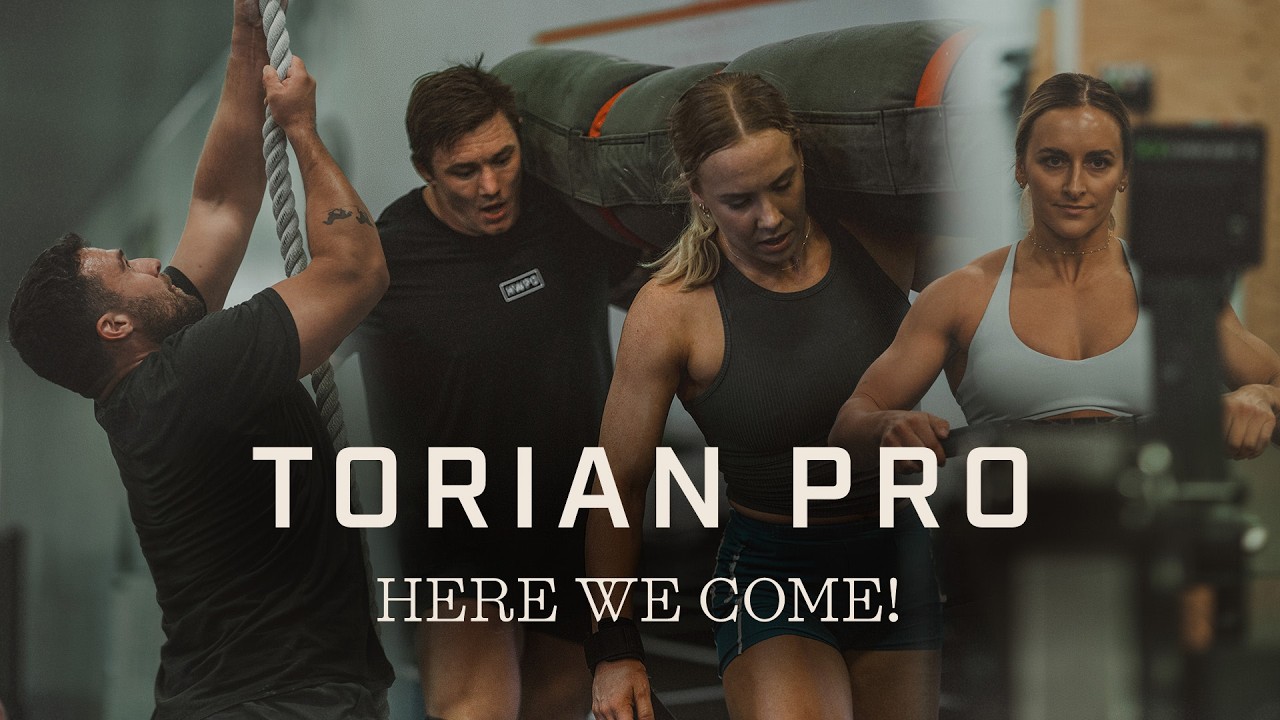
One of the more unintentionally amusing details to emerge from Team HWPO's pre-2026 CrossFit Games training block was a small but telling tale of misjudged distance. The team's mile-run-and-worm session, planned as the classic measure-mile-then-clean-and-jerks-then-measure-mile structure, ran longer per lap than the athletes had expected. The result was a session that quietly tested the team across roughly 20 percent more running than they had budgeted for.
"Based on our lack of research, this track is longer than 800 metres around," one of the team members explained on the day's debrief. "So we did like 1.2 miles per, which is great. That's what happens when you're in a competition. It's never the actual distance they say it is. It's either short, it's long. And so, it's great to practice both."
The pacing splits told the rest of the story. "We hit a mile at 8:09," the athlete said. "So it's nine-hundred around on the first one. And then we hit a mile at 8:04 on the second one." In other words, every advertised mile they ran was closer to a real 1.2-mile distance — yet their watch-mile splits actually narrowed across the workout, with the second lap clipped roughly five seconds faster despite cumulative fatigue.
The physical price came through in their post-workout chatter. "The my feet were cramping up," one teammate said. "My feet too," came the immediate echo, before another voice cut in: "I got so hyped when you said, I think we got more. We did 1.2. Two miles. Yeah. One and a half even."
The 30 worm clean and jerks — three athletes coordinating a heavy implement through full clean-and-jerk technique — became the wild-card of the day, the place where the team admitted plans came apart. "We didn't really talk about how we were going to manage the 30 reps," the athlete said. "So we kind of made some calls in between in the middle of the 30 reps, which is what you do anyways when you're in a competition because your plan kind of falls apart."
That kind of micro-adjustment is, by Team HWPO's own admission, exactly what makes a training session translate to the Games floor. The mile pacing they had agreed on held. The worm work, with no agreed structure, had to be solved live. The combination is what the team will face at the SAP Center later in the year, whenever Dave Castro's programmed running and barbell elements turn up.
The broader takeaway, for anyone watching from outside the camp: even with Mat Fraser at the head of a top-tier team, the gap between a planned session and an executed one widens fast under load. The fact that HWPO got faster on the second of their oversized miles is, in its own quiet way, the strongest indicator the team has heading into a 2026 Games framed by Castro as a return to CrossFit's own legacy.