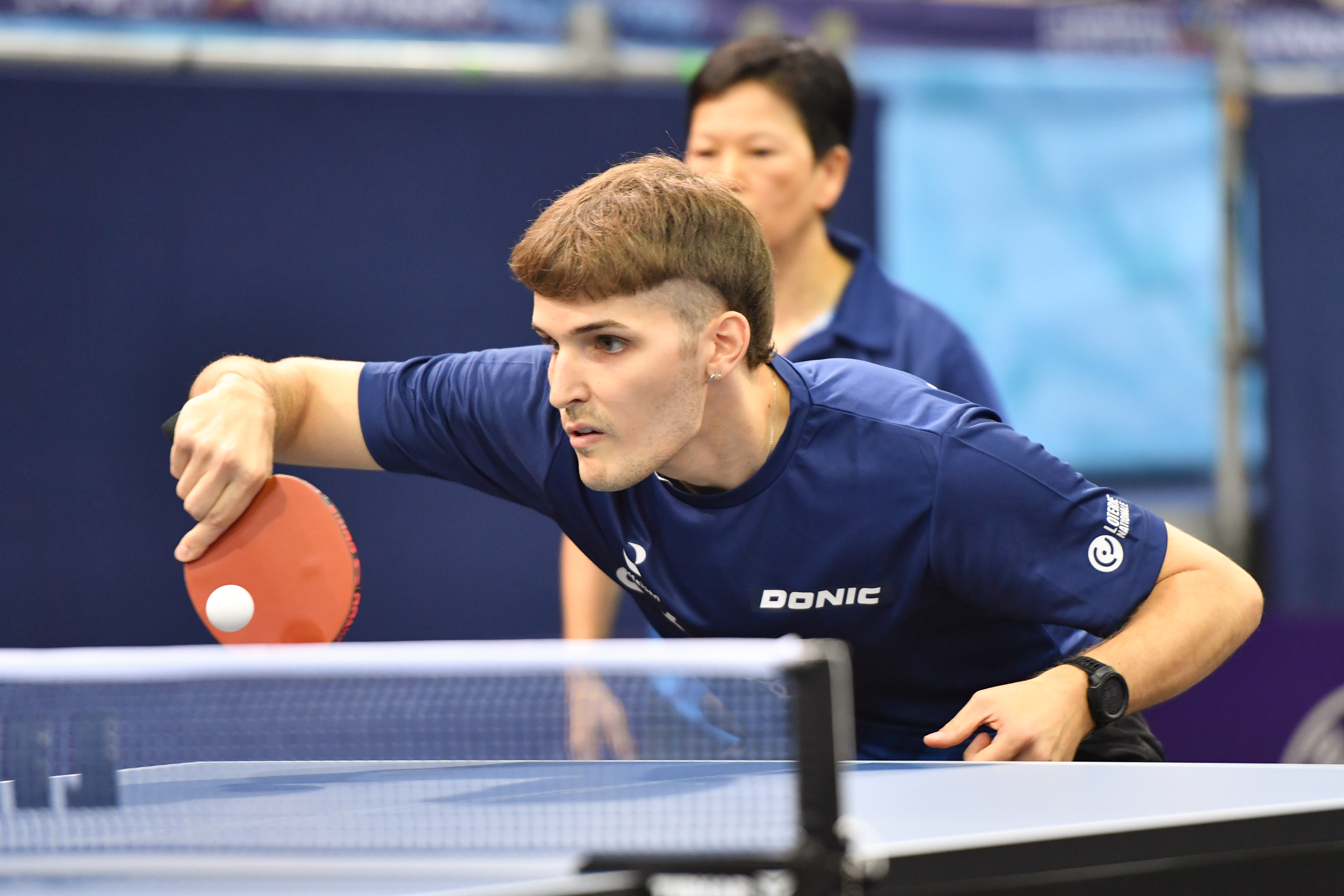
Wen Ruibo is supposed to be a sparring partner. Within China's national senior table tennis pool, the world No. 27 has historically been used as a high-quality training opponent for the country's top-tier names. At WTT Champions Chongqing this March, however, Wen produced one of the most physically and mentally demanding wins of the 2026 senior season — and reached the final.
Wen beat Japan's world No. 5 Tomokazu Harimoto 4-3 across seven sets that included a 21-19 decider, one of the longest deciding sets recorded in the WTT format. The full scoreline read 6-11, 15-13, 11-5, 7-11, 11-7, 21-19. The 15-13 second set and the seventh-set marathon ran past the limits of standard match length and into the kind of attritional grind that only a long-format set can deliver in modern table tennis, where the seven-set format is the staple of major events.
The semi-final's reach was amplified by what had happened on the other side of the draw a day earlier. Harimoto came into the match having been positioned by some Japanese commentators as a likely successor to Wang Chuqin among senior contenders, and he had been carrying the form line of a player likely to play in the Chongqing final. Instead, that role goes to Wen.

Wen will face Felix Lebrun of France in the men's final. Lebrun beat Japan's Sora Matsushima 4-3 in the other semi-final after coming back from a 1-3 deficit. Matsushima had himself reached the semis by toppling World No. 1 Wang Chuqin in five sets in the quarterfinals.
The women's semi-finals confirmed that China's depth on the women's side has been better defended through 2026. China's Kuai Man, the world No. 5, beat sixth-ranked teammate Wang Yidi 4-1 to reach the final. Japan's eighth-ranked Miwa Harimoto — Tomokazu's sister — beat Satsuki Odo in five sets in the other semi.
For the men's final, the format pits a French teenager against a Chinese player ranked 21 places below his world No. 6 opponent on paper but who is currently riding an unbeaten Chongqing run. The contrast in storylines is sharp. Lebrun is the visible new European challenger to Chinese senior dominance. Wen represents the depth of China's domestic pool — the kind of player who, even when ranked outside the top 20, can outscore world top-five Japanese players in a marathon.
For the broader season, the men's Chongqing draw underlines that China's senior men's primacy is no longer assured at every event. Matsushima beat Wang Chuqin in five sets. Lebrun beat Matsushima in seven. Wen beat Harimoto in seven. The men's senior tour has not had this sort of week of upset results since the Tokyo 2020 cycle began.

The match between Wen and Harimoto was also a useful data point on a structural level for the format. Seven-set table tennis matches, with sets to 11 and a two-point margin, are common; deciding sets running to 21-19 are not. The WTT format's deciding sets sometimes run long when two players combine to play long rallies and miss serve advantages, but the 21-19 finish here pushed the limits of the standard scoreboard and broadcast format.
The upshot, for Chongqing's table tennis week, is a final draw that is neither Wang Chuqin nor Tomokazu Harimoto. It is Lebrun-Wen on the men's side and Kuai-Harimoto on the women's. The 2026 WTT Champions Chongqing has produced a final pairing that reads as a snapshot of a senior international circuit in flux — with the world No. 1 watching from the airport rather than the podium.