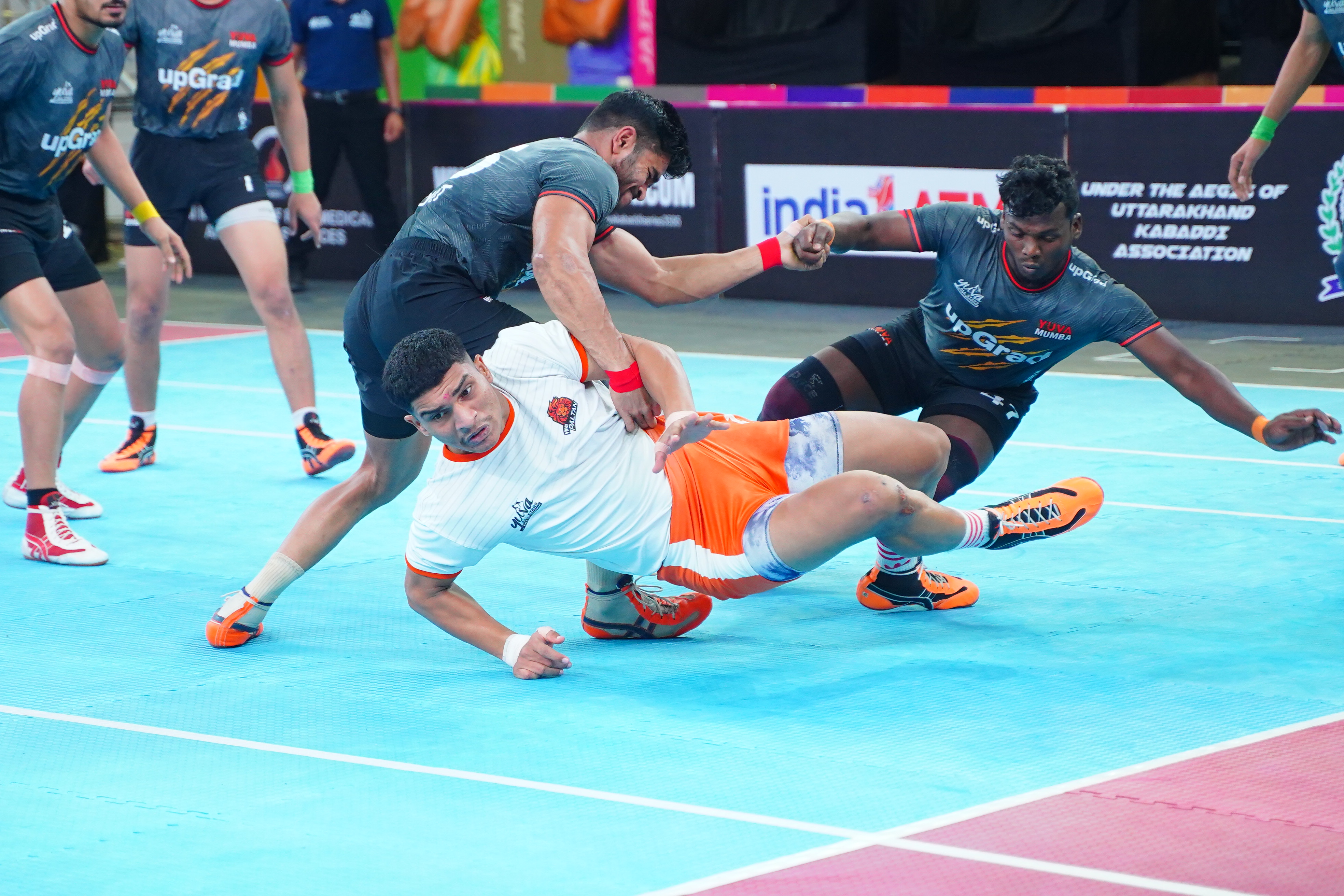
India's domestic kabaddi calendar is about to add another regional layer. The JBC Kabaddi League — the initials drawn from Jharkhand, Bihar and Chhattisgarh — will launch in the first half of 2026 with five teams playing across the three eastern Indian states, backed by all three state kabaddi associations and sanctioned through the Amateur Kabaddi Federation of India.
The Kabaddi Association of Jharkhand, the Bihar State Kabaddi Association and the Chhattisgarh Kabaddi Association have each formally approved the tournament. All three are AKFI affiliates, which gives the JBC competition official standing within India's kabaddi pyramid and clears the path for player participation rules common to the AKFI-sanctioned state and league competitions.
The league has positioned itself as a feeder competition. India's franchise economy in kabaddi has been led for a decade by the Pro Kabaddi League, but state and regional leagues have begun to multiply — the Uttar Pradesh Kabaddi League, the Punjab leagues and now the JBC competition all aim to provide visibility for emerging players and create local pathways into PKL squads.
Sports entrepreneur Rannvijay Singh, the league's joint promoter, framed the project in terms of mainstreaming the sport.
"State and local leagues are key growth pathways," Singh said. "We are confident in our vision to make kabaddi mainstream."
Singh's existing portfolio gives the JBC project a network running through Indian regional sports. He directs the Bhojpuri Industry Premier League and is the owner of the Awadh Ramdoots franchise in the Uttar Pradesh Kabaddi League. The cross-league experience matters in formats like the JBC, where logistics across three states with separate state association structures can complicate the basic operational play.
The league has also named Randhir Singh Sehrawat — known throughout Indian kabaddi as "Coach Saab" — as its Brand Ambassador. Sehrawat's credentials sit at the very top of Indian kabaddi's pre-PKL generation. He spent more than 40 years in the sport as both a player and a national-level coach. He received the Arjuna Award in 1997, the highest sporting honour in India for individual athletic excellence. He won the National Citizen Award in 1991 — the first kabaddi player in India ever to be honoured with the civilian award. He holds 93 medals from major tournaments across his career.
For a league launching from scratch in three states, the Sehrawat name is precisely the credibility marker organisers will use to attract sponsorship, broadcast attention and player commitment. His association with the league also signals to AKFI that the league is being run by people invested in the long-term coaching pathway rather than as a short-term promotional product.
The league has yet to publish the full schedule, the team names or the auction format. Five teams are confirmed across the three states, though the host cities and brand identities have not been disclosed. Organisers have indicated the structure will follow a familiar template: player auctions, fixed-day matchups, a round-robin into playoffs, and visibility provisions for grassroots players from the three states.
The broader context is one of regional growth. The Pro Kabaddi League has grown to 12 franchises since its 2014 launch, and its talent pipeline depends increasingly on smaller leagues like the JBC to surface emerging raiders and defenders for senior auctions. The Pulwama Kabaddi League launched in Kashmir earlier this month with a similar anti-drug campaign messaging baked in. The Spandan League at the BSF campus in Ajnala is in progress. The JBC will be the latest piece of an increasingly dense Indian regional kabaddi map.
Launch dates within the first half of 2026 have been signalled but not confirmed precisely. Organisers expect to follow up with full team and schedule announcements before the formal launch event.