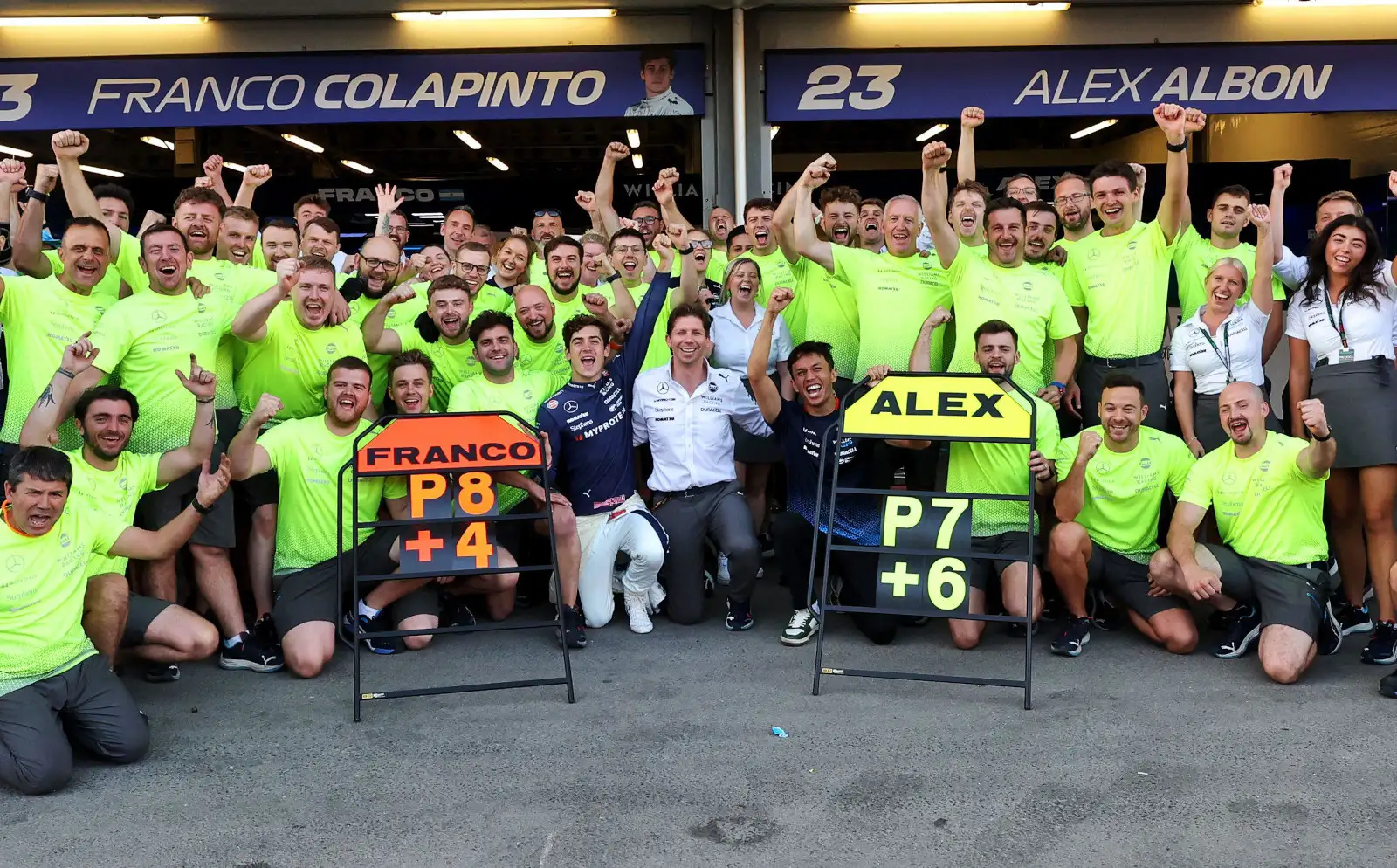
This season has marked a promising turnaround for Williams Racing, especially after their impressive finish at the Azerbaijani Grand Prix, where both drivers scored points. This marks the first time in a long while for the team to achieve such a feat, signaling a resurgence for the historic team.
The catalyst for this newfound success appears to be a substantial aerodynamic upgrade package that debuted just two weekends ago in the Netherlands. The effects of these changes were palpably felt in Baku, showcasing the evolution of the FW46 and the specifics that have contributed to its improved track performance.
As race day approached in Azerbaijan, it became apparent that the updates were taking effect. "The FW46 is looking sharp on the circuit,” said a team representative, reflecting the optimism surrounding the vehicle's upgrades. Notably, this marked the first occasion since Las Vegas last year that both Williams drivers found themselves in Q3.
Team Dynamics
The aerodynamic overhaul introduced in Zandvoort has been substantial, with a primary focus on the vehicle's floor. Enhancements included a new diffuser, sidepod inlets, engine cover, and central air intake designs—all aimed to sculpt airflow more efficiently around the car. Alongside these aerodynamic updates, various components were also redesigned to lighten the overall weight of the FW46, an ongoing struggle for the team.
“Reducing weight has been crucial; it’s something we’ve focused on all season,” said head engineer at Williams. This weight reduction was illustrated by previous updates and has culminated in a significant evolution of the car since the last major update in Canada.

**Related:** [Norris Dominates Brazil GP as Verstappen Delivers Masterclass Drive from 16th to Podium](/article/norris-dominates-brazil-gp-as-verstappen-delivers-masterclass-drive-from-16th-to-695b73)
Qualifying
Among the major highlights of this upgrade is the overhaul of the sidepod inlets. Williams has transitioned to an overbite geometry, a directional change that reflects broader trends across the grid pioneered by Red Bull earlier this season. This geometry, previously underbite, dramatically alters airflow management, directing excess air to generate localized downforce beneath the sidepods.
"The overbite design aims to channel excess air effectively, thus generating additional local downforce, particularly at the front of the car’s floor,” explained a senior aerodynamicist. These tweaks help manage the front-end downforce effectively, particularly at low speeds—a critical aspect for performance this season.

Career Journey
Notably, changes in the floor's edges suggest that Williams is not only addressing downforce at the front but is also working to enhance overall aerodynamic balance. Typically, teams require time to discover the optimal setup when implementing radical upgrades, but early signs indicate that Williams is quickly finding a sweet spot, as evident during their run at Monza.
Historically, since the 2022 regulatory changes, Williams has built a reputation for its impressive straight-line speed. This has been an asset on circuits that favor that dynamic, enabling the team to consistently score points, particularly at tracks like Monza. However, this upgrade signals that a more versatile capability is emerging for the team.
“The car now has much greater stability and speed in slower corners while retaining its signature straight-line prowess,” one of the drivers commented post-race. This versatility was highlighted during qualifying in Baku, where Williams' lap times mirrored those of much stronger teams like Mercedes.
On race day, Williams showcased what could be described as their best race pace of the 2024 season. What was notable about their performance was their ability to capitalize on a late-race incident that saw both Perez and Sainz involved in a collision. The team ultimately secured an impressive 10 points from the race, exceeding expectations, and positioning themselves as formidable competitors in the midfield battle.
The results in Baku are a clear indication that Williams is on an upward trajectory, providing not just a boost in points standings but also raising team morale and fan interest. With the upgraded FW46 showing promise, the outlook for the rest of the season remains optimistic, as both drivers and team management seek to build upon this momentum and continue their quest for further improvements.