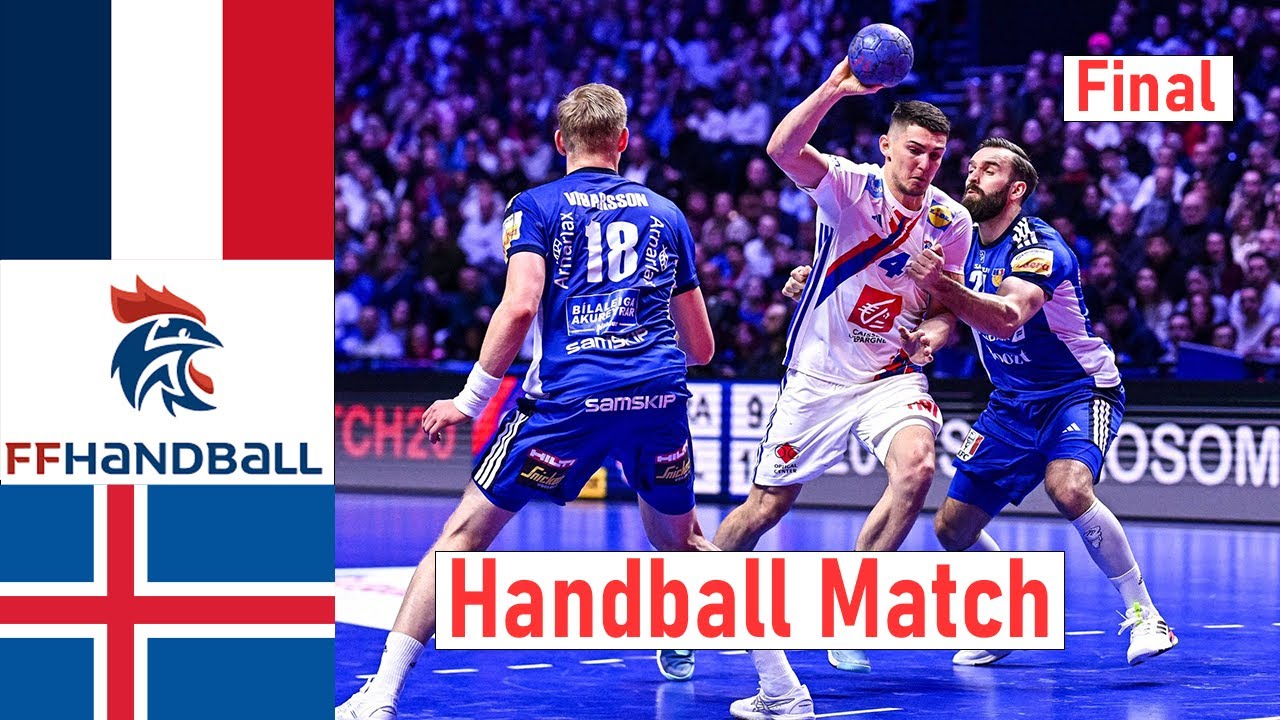
Sunday's 31-29 victory over Iceland gave France a Tournoi de France trophy for the first time in the event's history, capping a weekend coach Guillaume Gille had openly framed as a final calibration window before EHF EURO 2026 in Norway.
The Bleus' three-day run in Paris was always more about minutes and structures than about the result. France beat both Austria and Iceland, with Spain pushing the hosts to the limit in the round-robin opener. Captain Ludovic Fabregas led from the pivot across all three matches, while Mike Nahi, who returned from a long-term injury, banked critical full-pace minutes against tournament-grade opposition.
"Pour la première fois de son histoire, le handball français pose ses valises ici à La Défense," the French broadcast underlined as the trophy ceremony began.
The headline takeaways for Gille came from the final. France's first half was loose, with Iceland exploiting weak pivot coverage to fire from nine metres. The second half was the corrective, with goalkeeper Charles Bolzinger settling and the back-court of Aymeric Minne, Hugo Descat and Dylan Nahi forcing transitions that ground the Vikings down.
Dylan Nahi's late breakaway sealed the title, the right wing finishing into an empty net to push France two clear with less than a minute remaining.
"L'équipe de France part vers l'Euro avec le sentiment du devoir accompli et le plein de confiance avant son premier match," the commentary said: France goes to the Euro with the sense of a job done and full confidence before its first match.
The Tournoi de France's value for the federation goes beyond results. Andrew Dillon-style scheduling diplomacy is part of the equation: the staging of the event in Paris La Defense Arena is part of the long-term play to anchor major handball events in the capital following Paris 2024's Olympic successes. The arena was full enough to be loud, and the trophy presentation tightens the relationship between the federation and a city building its post-Olympic handball identity.
The roster picture is also clearer. Bolzinger profiles as a credible No. 1 or first rotation keeper. Mike Nahi has come through three matches without a flare-up. The wings, with Dylan Nahi and Hugo Descat, look match-fit, and the pivot pairing of Fabregas and Romain Lagarde gives Gille flexibility against teams that defend wide, like Spain, or narrow, like Norway.
Gille's outstanding question is the back-court depth behind Aymeric Minne and Elohim Prandi. Iceland's first-half pressure on those positions invited France into too many transitions in the wrong direction. Gille has a thin window before Thursday's group opener to fix the rotation patterns, but the Tournoi de France weekend at least exposed the issue rather than hiding it.
For Iceland's Snorri Steinn Gudjonsson, the runners-up trophy is more than consolation. The Vikings extended a fully-resourced France to two goals on French soil, and Vespur Hugo Descat plus left wing Ellidi confirmed their roles among Europe's elite finishers. Iceland enter their own EHF EURO group as a knockout-stage threat.
For Spain, who finished third, the weekend was less defining but no less informative. Coach Jordi Ribera's side blooded younger players against tier-one opponents and will leave Paris with the same calibration value France extracted.
The Tournoi de France 2026 will be remembered for France's maiden home title, and as the moment Gille's group converted a solid generation into a championship-ready squad.