The Super Touring era transformed the British Touring Car Championship into a global spectacle, attracting manufacturers and Formula One talent that would create some of the most controversial and compelling seasons in the series' history.
By 1994, the championship had already drawn representatives from the UK, France, Germany and Japan, but the arrival of Italian marque Alfa Romeo would spark fierce debate across the paddock.
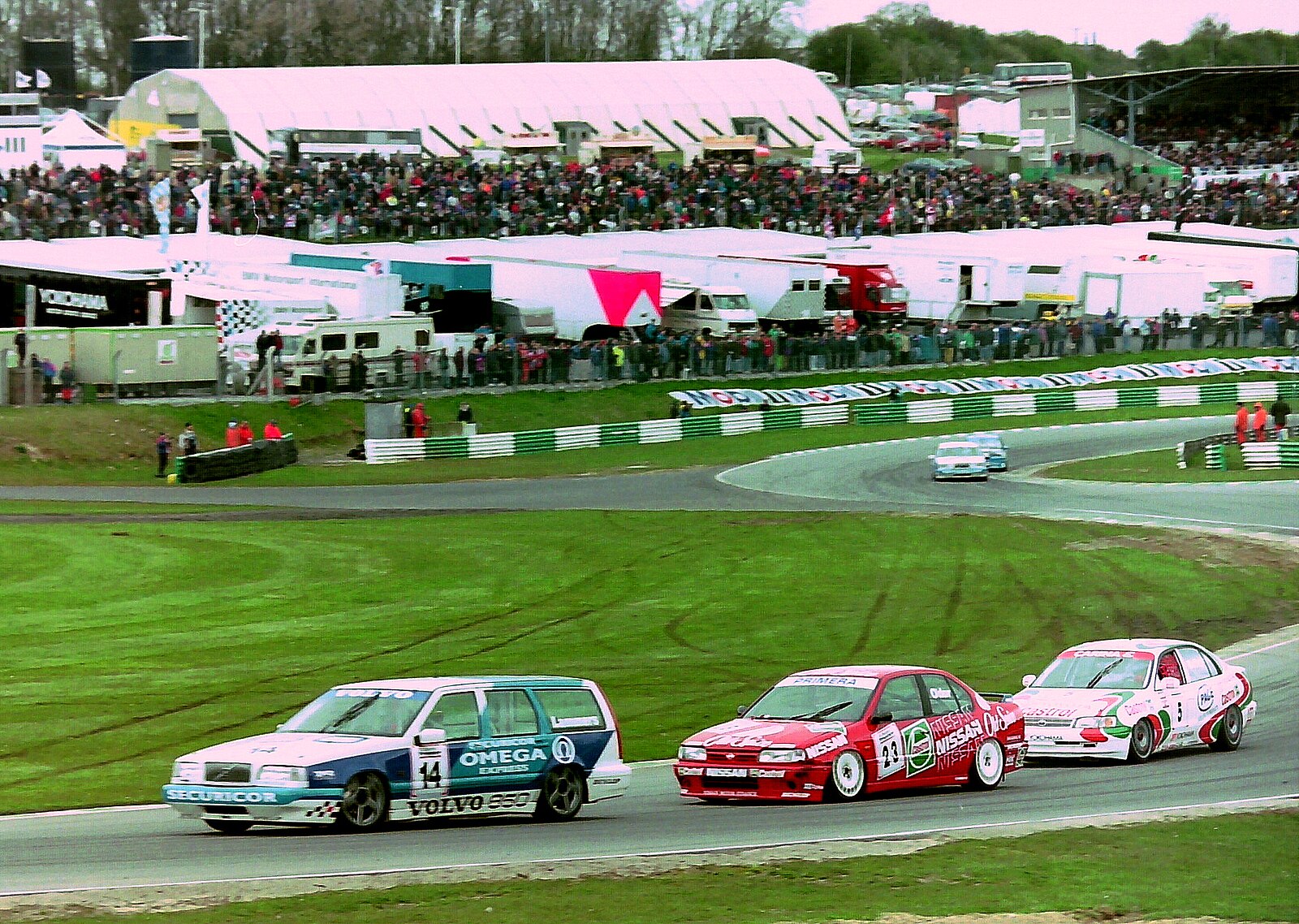
Alfa Romeo entered with their 155 model, bringing Formula One driver Gabriele Tarquini to spearhead their campaign. Volvo also joined the manufacturer exodus with their distinctive 850 estate, a car that drew bemused looks on media day but would become a modern cult icon.
Career Journey
Career Journey
Career Journey
Tarquini's early dominance was immediate and devastating. He claimed the first five victories with apparent ease, leaving established competitors like Paul Radisich and John Cleland trailing in his wake.
**Related:** [F1 2026: The Shift in Aerodynamics and Front Wing Dynamics](/article/f1-2026-the-shift-in-aerodynamics-and-front-wing-dynamics)
The Italian's advantage initially appeared linked to Alfa's aerodynamic wing package, though this theory was later challenged. "The engineering in the car was what made it better than the rest," Tarquini would later state, debunking the widespread belief that wings alone provided their edge.
"The engineering in the car was what made it better than the rest,"
Team Dynamics
Team Dynamics
Alfa exploited BTCC regulations requiring cars to be based on road-going counterparts by creating a homologation special of the 155, named the Silverstone. This move allowed them to race with their controversial aero advantage, infuriating rival teams.
The complaints reached such intensity that Ford's Andy Rouse reportedly purchased a 155 Silverstone to study its engineering secrets. The controversy peaked at Oulton Park, where Alfa dramatically withdrew from the meeting in protest after being ordered to compete without their aero package.
Race Results
For the following Donington round, Alfa returned with lowered wings. Despite reduced pace, Tarquini's consistency proved sufficient, with victories at Brands Hatch and Silverstone plus numerous second-place finishes securing the championship.
The 1995 season escalated the Formula One involvement significantly. Renault gained backing from Williams, while Volvo partnered with Tom Walkinshaw, known for his work with Benetton and Arrows. With Tarquini departing (though returning mid-season), Alfa signed ex-F1 racer Derek Warwick. Aerodynamic aids were legalized to avoid repeating the previous year's controversies.
At Vauxhall, John Cleland's pre-season confidence was evident in his instructions to the team: "Clean it, put it back in the truck, and bring it to Donington, don't change a thing." The charismatic Scot's belief in his aging Cavalier would prove well-founded as the model prepared for one final campaign before the Vectra's 1996 introduction.
Cleland faced formidable opposition from Rickard Rydell in the Volvo 850 saloon and Alain Menu in the Williams Renault Laguna, both of whom frequently matched or exceeded his pace.
Menu arguably demonstrated the season's strongest raw speed but suffered reliability issues with the Williams-Laguna partnership. His seven victories exceeded Cleland's six, including three wins from the final five races that helped secure Renault's manufacturers' title. Teammate Will Hoy claimed the remaining two victories.
Rydell's strong season start faded dramatically in the closing stages. He managed just 13 points from the final six races, with a high-speed retirement at Snetterton effectively ending his title aspirations.
Cleland's smooth, consistent approach in the Cavalier provided the perfect farewell for the veteran model. A mid-season streak of seven podiums, including four victories, proved decisive in his championship bid. From 25 rounds, he achieved 18 podiums while securing his second title.
This championship carried special significance for Cleland, contrasting with his 1989 success under the old class rules system where he rarely took outright victories despite accumulating the most points. The 1995 triumph represented pure pace and consistency against the field's best.
With eight different race winners across the season, 1995 delivered one of the closest championship battles in years, establishing a template for the intense competition that would define the Super Touring era's peak years.