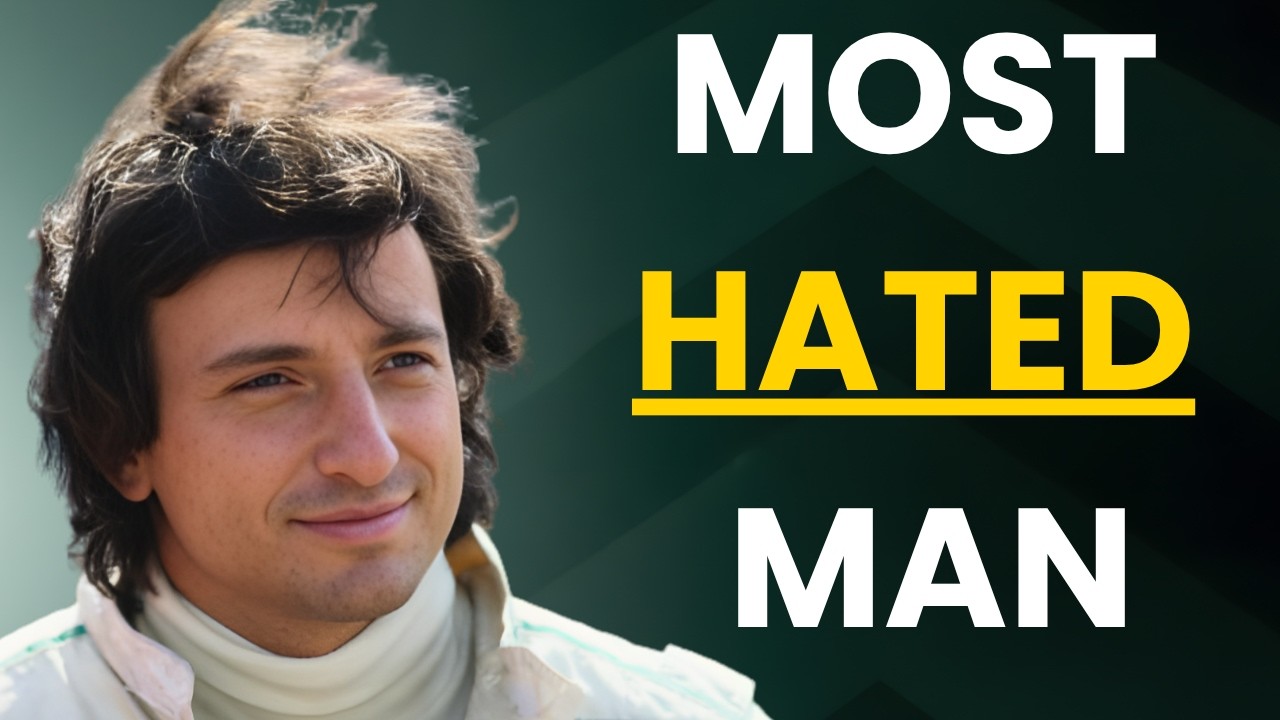
In the autumn of 1978, a group of the world's best racing drivers met quietly and tried to get one of their own thrown out of Formula 1. That driver was a 24-year-old Italian called Ricardo Patrese. The story of what happened next, told in recent weeks by the Circuit Stories YouTube channel in a documentary that has reopened old wounds, is one of the sport's most awkward chapters.
The context was tragedy. Ronnie Peterson, the Swedish star of Lotus, died from complications of injuries sustained at the start of the Italian Grand Prix. In the heat of grief, Peterson's peers — among them James Hunt, one of the loudest voices in the paddock — decided the crash had been caused by Patrese's aggressive driving. They demanded the young Arrows driver be removed from Formula 1.
"They demanded Patrese be removed from F1," one of the Circuit Stories contributors recalled, setting the scene. It was, by any modern definition, a driver-led witch hunt. And it stuck. Patrese was banned from the next race — the United States Grand Prix — and his career looked, to outsiders, to be over before it had really started.

The advice Patrese received in that moment, according to the documentary, did not come from a paddock ally. It came from the fiercely principled Ricardo Patrese himself, relayed through friends in a direct instruction: "You have a big problem. Say you were wrong. Apologise."
Patrese refused. In his view he had done nothing wrong — the data, subsequent review, and honest reflection from many of his competitors eventually confirmed as much — and to apologise would be to accept a verdict he believed to be false. It was a stance that would define the rest of his F1 career.
Circuit Stories frames what followed as both vindication and revenge. "Patrese became most feared despite being banned," the narrator notes. When the Italian returned, he drove with a chip on his shoulder that turned him from a promising qualifier into one of the most ruthless racers of his era.
The most damning reappraisal in the documentary comes, quietly, from Hunt himself — decades later. "Hunt's hatred was unjustified," the producers conclude, weaving in contemporary accounts from people who knew both men. "Patrese genuinely decent."
Another old friend, speaking on the documentary, summed Patrese up with the kind of simple language that carries weight precisely because it is plain. "A good man, genuine, honest, true."
And then there is the Nigel Mansell angle. By the early 1990s, Mansell and Patrese were Williams team-mates during the peak of the team's dominance. Mansell, never shy about his hierarchy of rivals, quietly came to understand something the rest of the paddock did not always see. "Mansell realised Patrese was his most dangerous rival," the documentary records.
The verdict of posterity is more complicated than any press conference in 1978 could have captured. "Enormously talented, but always in the wrong place at the wrong time," is how one F1 historian summarises Patrese in the film — a career that produced six Grand Prix wins, 37 podiums and one of the longest F1 tenures in history, but never the world title many insiders believed he deserved.
Circuit Stories' documentary, now circulating widely among F1 fans, is not a rehabilitation piece in the narrow sense. Patrese does not need one. He is beloved in Italy and respected in motor sport's inner circles. What the film does is correct the record for a new generation — one that, thanks to social media clips of 1980s Williams glory days, is only now beginning to understand how close Formula 1 came to banishing one of its own on the basis of nothing but collective grief.
The lesson, if there is one, is older than F1. Be slow to accuse, faster to forgive, and slower still to demand an apology from someone who has nothing to apologise for.
---
*Originally published on [Formula 1 News](https://newsformula.one/article/ricardo-patrese-monza-1978-banishment-story). Visit for full coverage.*