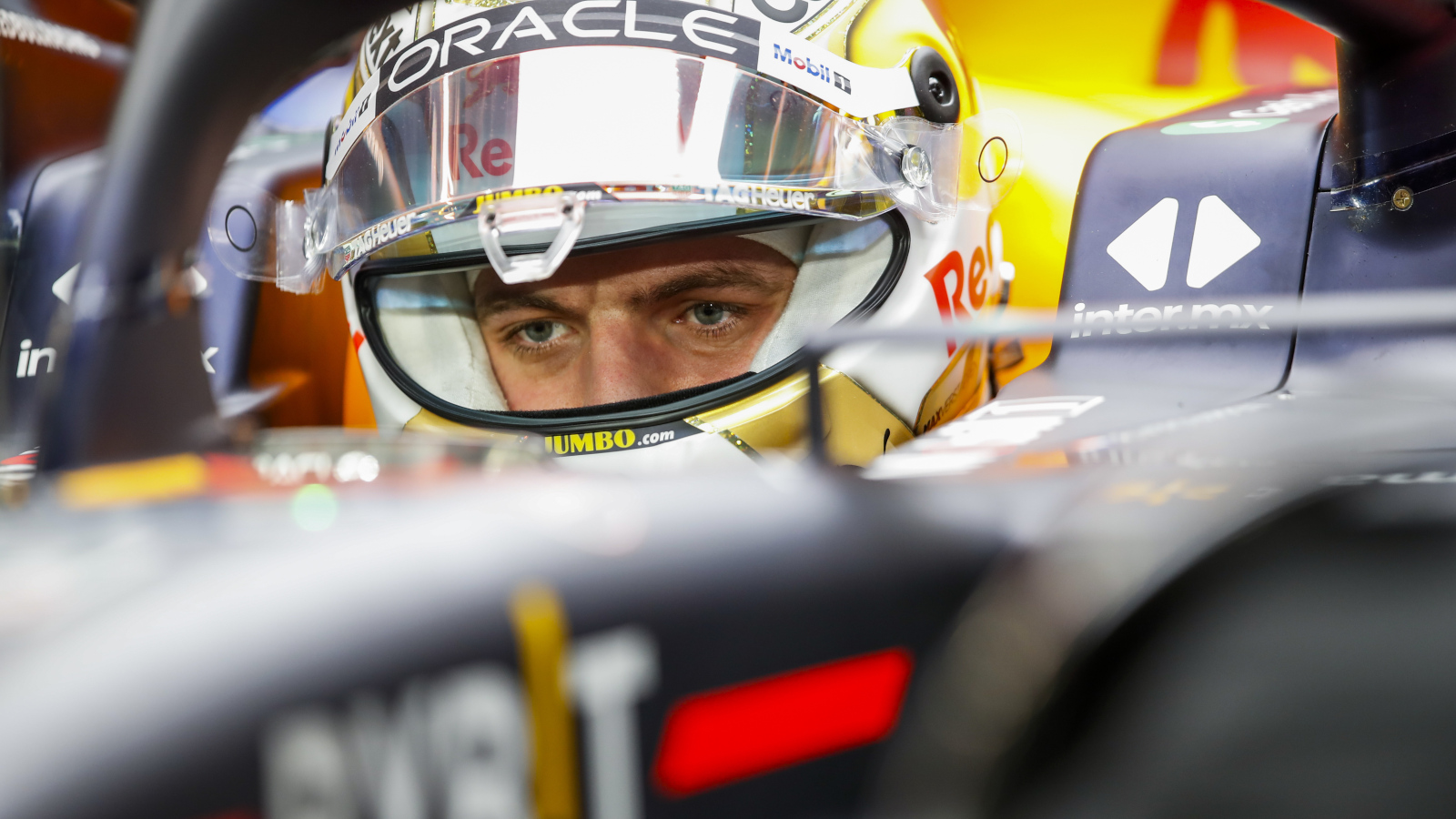
Red Bull's upgraded RB22 has reopened a design conversation most of the paddock thought was closed, after Miami revealed an unusual sidepod-to-floor junction that the FIA has cleared as legal — but only just.
The Miami weekend reshaped the pecking order. Red Bull, McLaren and Ferrari all brought their first major upgrade packages, and the RB22 looked like a different car. Max Verstappen was a genuine pole contender on Saturday and should have been in the podium fight on Sunday but for an opening-lap spin. Before Miami, the same car had been midfield material in China and Japan, with Verstappen and Isack Hadjar complaining about an unpredictable rear end.
The striking visual changes were obvious: a large dive plane added to the front wing and a rear wing rotated into an upside-down configuration. But the more significant change sat in the body of the car. A revised floor and bodywork package, a new sidepod inlet, a higher-walled engine cover and a wide waterslide design produced a clearly different concept to Ferrari, Mercedes and even McLaren.
The controversial detail sits at the rear of the sidepod, where a sharp fence has been added at the point where the sidepod bodywork meets the floor — rather than the smooth curved transition every other car carries. McLaren team principal Andrea Stella spelt it out clearly. Red Bull, Stella said, has been 'quite smart and innovative' in exploiting what he called 'legality concessions' to introduce a shape rivals had not believed was possible.
The trick is in the regulatory definitions. The front of the sidepod sits within the side inlet reference volume, while the back falls under the engine cover and must be smoothly curved — a concave radius of no less than 50mm, convex of no less than 75mm. The FIA wrote those rules to stop teams sprouting sharp aerodynamic fins on safety and complexity grounds. But the area where Red Bull's sidepod meets the floor is technically part of the floor corner, where the same geometric restrictions do not apply.
Red Bull has split its design so the back of the sidepod is treated as part of the floor corner rather than the engine cover. When two bodywork components are trimmed and combined, the surfaces at the internal boundaries are no longer in contact with the external airstream. In F1 regulatory terms, that means the sharp edge is not an aerodynamic surface — it is a joint between sections — and the minimum-radius requirements do not apply.
The FIA has cleared the design as legal, but the governing body believes it goes against the intention of the regulations and will monitor whether other teams try to replicate it. If the concept contributes to a more turbulent wake or sparks an arms race in sharp-edged bodywork, the FIA could rewrite the rule for 2027 or beyond.

What Red Bull appears to be chasing is a sealed floor edge. The sharp fence may create a well-defined vortex at the outboard rear corner of the floor, and the slotted floor edge feeds energised air inboard of that vortex. Together they form a barrier between clean underfloor airflow and the turbulent wake coming off the rear tyre — raising underfloor pressure and protecting against the kind of sudden downforce stalls that hurt the car in China and Japan.
Hadjar had described the early-season RB22 as forcing him to guess what the car would do each time out, and Verstappen said the car swung between understeer and oversteer extremes. The Miami package was aimed squarely at that rear stability, and Stella's comments carried the clear implication that every team will now study the design and consider whether to copy it.
For now, Red Bull has stolen a march. The question is whether the FIA decides this is exactly the kind of innovation F1 wants to encourage — or exactly the kind it wants to close down before next year's car concepts are locked in.
---

*Originally published on [News Formula One](https://newsformula.one/article/red-bull-rb22-sidepod-loophole-fia-clears-legality-concession-2026). Visit for full coverage.*