The 2025 Formula 1 Qatar Grand Prix presented teams with a stringent tyre strategy dictated by a 25-lap cap on each stint. This year's strategy hinged upon the performance of the Medium tyre, which played a crucial role in the overall race dynamics. As Pirelli returned with its C1, C2, and C3 compounds, the added stress of higher loads this season made the management of the front-left tyre vital for a successful race.
"We saw some tyres where graining had accelerated wear. These instances, noted mainly on the front-left, are exactly why the limit of 25 laps on each set has been imposed," noted Mario Isola, Pirelli Director of Motorsport. His insights emphasized the importance of understanding tyre durability, especially with expectations for the fastest strategy leaning towards a Medium-Medium-Soft plan.
Setting the scene for the Qatar GP, the track conditions evolved exceptionally well. The weekend kicked off with a strong grip and a stable surface due to milder winds, leading to quicker lap times than seen in 2024. Initial sessions revealed that while the Medium offered a balanced performance, the Soft provided peak grip but struggled with wear. The Hard tyre maintained stability but lacked the pace needed for competitive racing.
Career Journey
Career Journey
**Related:** [Sao Paulo Grand Prix: Analyzing Driver Tyre Strategies](/article/sao-paulo-grand-prix-analyzing-driver-tyre-strategies)

Career Journey
In Free Practice 1 (FP1), teams predominantly opted for the Hard tyre to establish a baseline for their race strategies. With ambient temperatures rising, George Russell from Mercedes showcased a comfortable handling of the Hard compound. The McLaren drivers strategically delayed their runs until the end, taking advantage of track evolution. Performance gaps in the early runs suggested that the Soft would emerge as the primary choice as drivers clocked faster times nearing the conclusion of sessions.
Qualifying
Qualifying

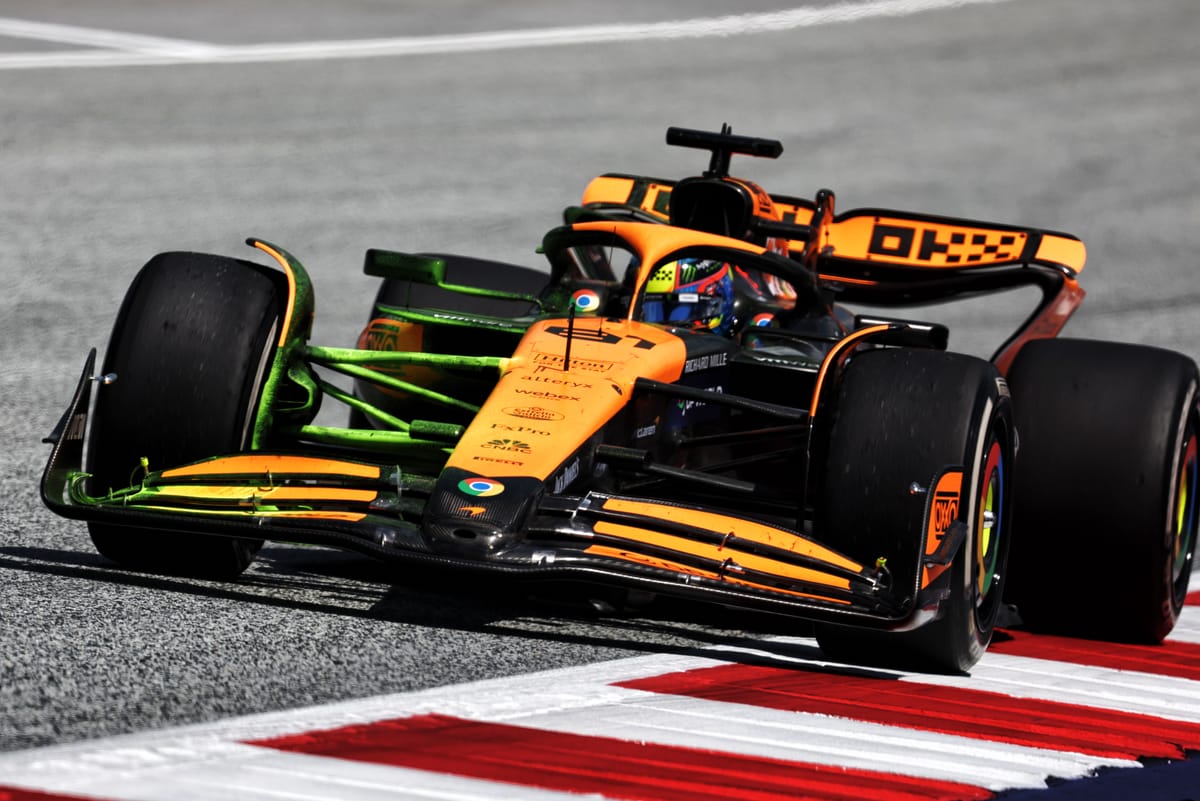
Sprint qualifying on Saturday changed the competitive landscape. Taking place in cooler conditions with ambient temperatures at 22°C, the surface rubbered in over the laps, showcasing a six to seven-tenths gap between the Medium and Soft. Oscar Piastri's remarkable performance, which secured pole position with a 1m19.387s, further solidified the need for teams to prioritize the Soft compound in pursuit of victory.
Every driver’s strategic foundation boiled down to similar allocations: one new Hard and two new Mediums, ensuring the feasibility of a Medium-Medium-Soft strategy without compromising performance. While some drivers boasted different quantities of Soft tyres, the core race strategy remained unchanged. The success in the race would rely on factors like timing, traffic management, and efficiently navigating the crucial Lap 32 pit window.
Qualifying
As the grid prepared for the Grand Prix, Isola added, "The fastest strategy is with a final stint on the Soft, following a pit stop between laps 44–50. The Medium will likely be the preferred race tyre. If there are no Safety Cars, teams are likely to maximize the 25 laps allowed for each set.” This underscores the need for teams to consider when to pit and how to manage their tyres throughout the race.
The impact of tyre choice and timing cannot be overstated. The parity in tyre allocations across teams meant that decision-making in traffic and during crucial laps would dictate the outcome. "With tyre banks essentially level, the race becomes a test of timing, traffic, and who dares to meet Lap 32 on the limit," Isola concluded, pointing out that while tyre strategy was crucial, race execution in terms of timing and clean out-laps would be equally important.
"With tyre banks essentially level, the race becomes a test of timing, traffic, and who dares to meet Lap 32 on the limit,"
With no teams possessing two new Hard tyres—a requirement for double-Hard strategies—the battle for the top spots would likely center around clear execution of the Medium-Medium-Soft plan. As the Grand Prix unfolded, it became evident that those who managed their tyre strategies effectively amidst the myriad of factors would emerge on top, ultimately deciding the fate of the championship points on the day.