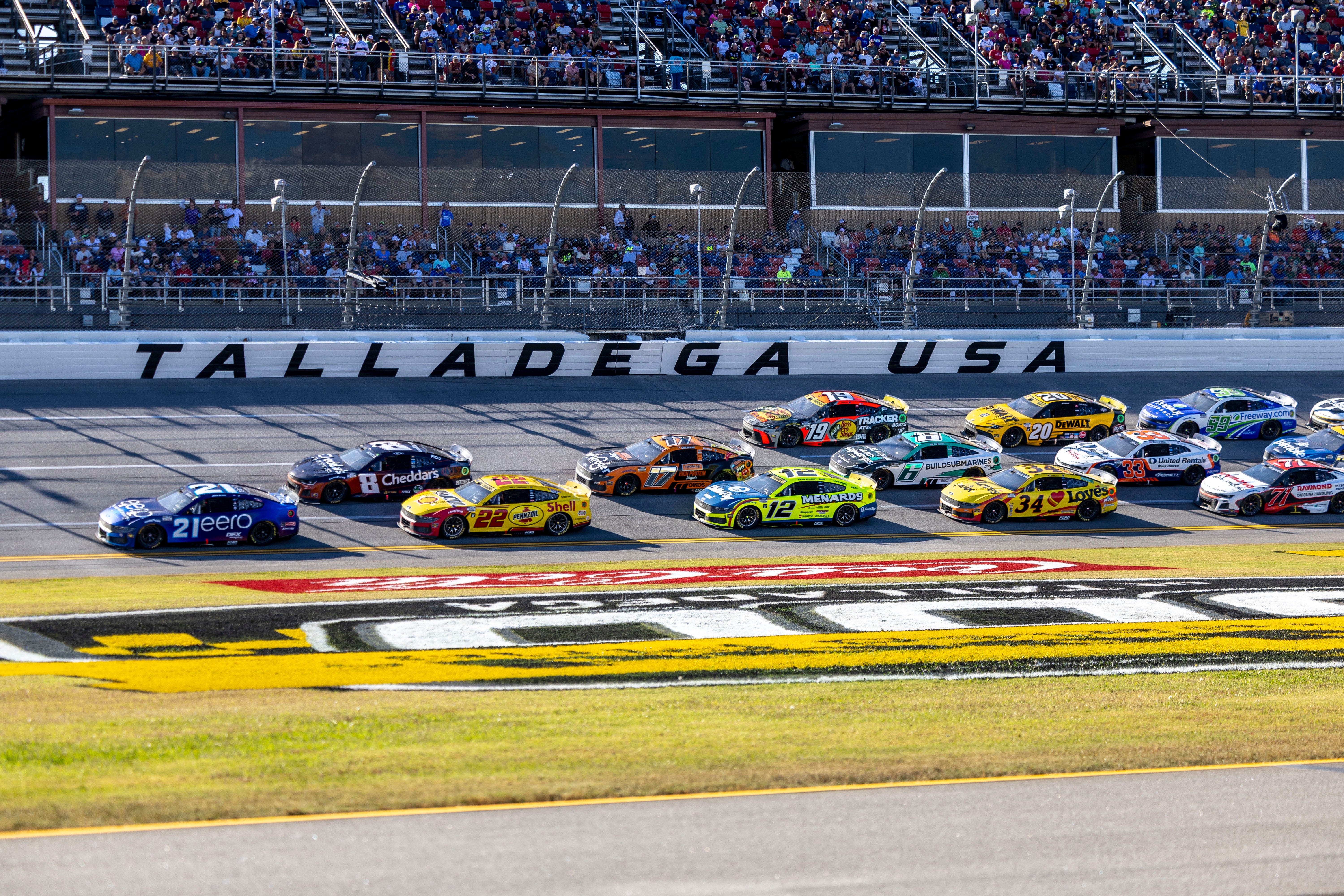
NASCAR has confirmed it will overhaul the stage lengths for this month's Cup Series race at Talladega Superspeedway, a direct move to kill off the fuel-saving strategies that have turned recent superspeedway races into rolling economy runs rather than flat-out drafting battles.
The traditional Talladega stage structure of two short stages followed by a longer final stage will be inverted for the 27 April GEICO 500. The opening stage will now be the longest, with the final two stages shortened to a length NASCAR believes cannot be completed without a fuel stop.
John Probst, NASCAR's Executive Vice President and Chief Racing Development Officer, told the Hauler Talk podcast the change was engineered specifically to deny teams the option of stretching fuel to the flag.
"If you look at generally how a lot of our speedways were laid out it was a short stage, a short stage, and then a long stage to the end," Probst said. "Going into Talladega, we're going to flip that and adjust the lengths of the final two stages such that we're confident that the last two stages are short enough to be made without a fuel stop."
The theory, Probst explained, is that by forcing every car to take on fuel at the stage breaks, NASCAR removes the incentive to lift-and-coast in the closing laps and restores the full-throttle pack-racing the 2.66-mile speedway was built for.
Probst also acknowledged that the lengthened opening stage could create its own strategic wrinkle.
"It could be interesting, as well, in that first stage, the length of it, if there's some that try to do it on one stop versus some that try to do it on two," Probst said. "We think that if there are some that try to do it on two, they may drag the group that tried to do it on one along with them to where they won't be able to do it in one, so it's got the potential there for some pretty interesting strategies."
Not all drivers believe the change will end fuel management entirely. Ricky Stenhouse Jr., a two-time Talladega winner, was blunt about how he plans to approach the race.
"Yeah, I think I'll probably still save fuel," Stenhouse said.
The JTG Daugherty driver explained that even with shorter stages, there is still a tactical reason to manage consumption so that less fuel needs to be loaded at each stop.
"Because, you still have to make a pit stop after the stage is over, and so you're still going to want to put as less…especially the second stage, going into that third stage, you're still going to want to put the least amount of fuel in as possible," Stenhouse said.

The rules change is the most visible part of a broader push NASCAR has signalled on superspeedways. Chief Racing Officer Elton Sawyer and Steve O'Donnell, NASCAR's Chief Operating Officer, have both publicly discussed the fuel-saving issue across the early 2026 season.
O'Donnell cautioned earlier this week that the revised stage lengths were just a starting point, not a final solution, suggesting further adjustments could follow if teams still find ways to coast to the flag.
The timing of the tweak is significant. With Daytona and Atlanta also falling under the superspeedway rules package, Talladega becomes a live-fire test for whether mandatory fuel stops can restore the bump-drafting, three-wide chaos that once defined the form of racing. If Sunday's race delivers the sort of green-flag shootout NASCAR is chasing, the formula will likely be rolled out to other tracks by late summer.
Either way, the drivers will soon know whether flipping the stage maths is enough – or whether, as Stenhouse hinted, teams will simply find a new way to stretch a tank and turn 188 laps of Talladega into another strategy puzzle.
---
*Originally published on [Motorsports Global](https://motorsports.global/article/nascar-talladega-stages-shortened-fuel-saving-2026). Visit for full coverage.*