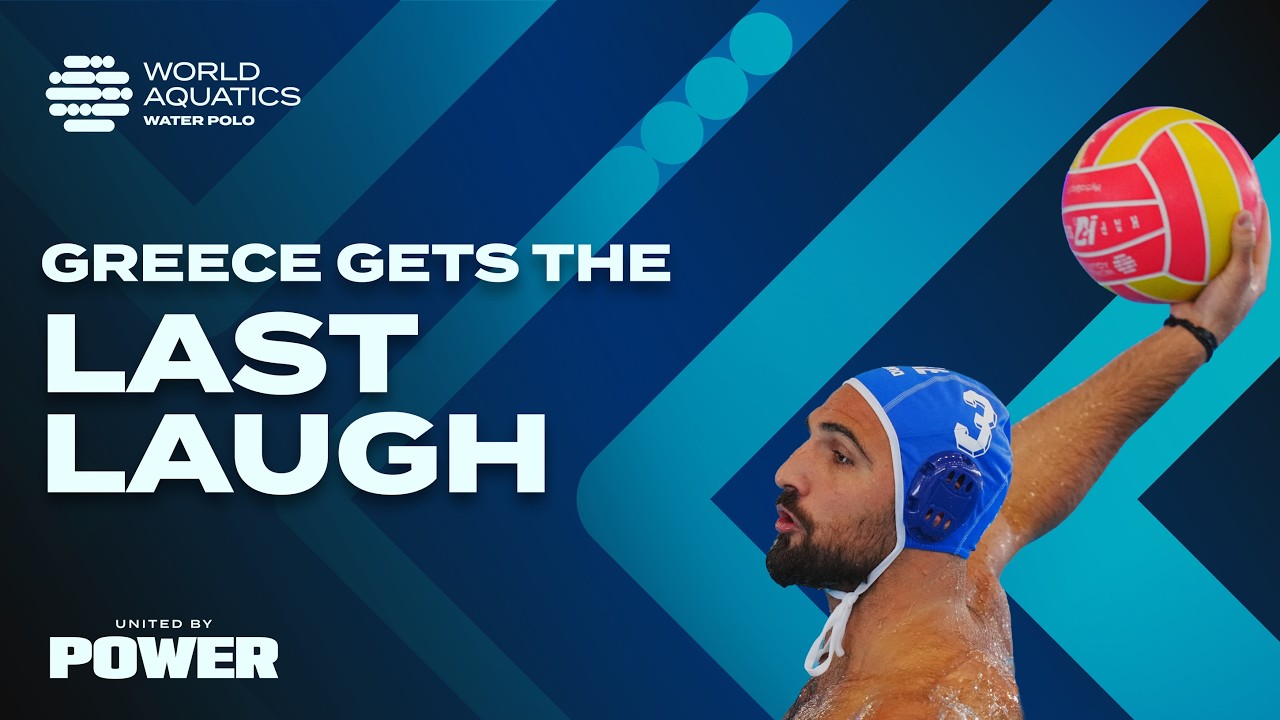
The 2026 Men's Water Polo World Cup at Alexandroupoli has been defined by one partnership: Greece's captain Stylianos Argyropoulos and centre forward Konstantinos Kakaris, who have combined for nine goals across the wins against Olympic champion Serbia and European champion Spain to drive the host nation into the World Cup final.
Argyropoulos, the 32-year-old captain, has now produced 14 goals across the two matches and the build-up phase, making him the leading scorer in the tournament. Kakaris, his pivotal centre forward partner, finished the Spain match with two crucial extra-man goals and the decisive penalty in the shootout that broke Spanish resistance.
"And a goal. Argyropoulos, the Greek captain, scores for his team. Four goals for Argyropoulos in this game," the World Aquatics broadcast called during the Spain match. "And now the score is five for Spain, seven for Greece."
The pair's chemistry is the product of years of club-level pairing at Olympiacos, where they remain teammates. Their movement patterns, particularly the high-low rotations between Argyropoulos at the perimeter and Kakaris at the two-metre line, are difficult to defend even for elite zone defences.
Greece coach Theodoros Vlachos has built the team's offensive structure around the Argyropoulos-Kakaris axis. Athanasios Kalogeropoulos provides a third option from the wing, while Antonios Papanastasiou's man-up conversion completes the four-man set that has driven Greece's tournament. Goalkeepers Ioannis Zerdevas and Konstantinos Giorgatos have rotated, with both producing decisive saves when called upon.
Serbia coach Dejan Savic and Spain coach David Martin Lozano had similar problems in their respective matches against Greece. Both attempted high pressure on Argyropoulos at the perimeter, but the captain's quick release and ability to create space for Kakaris at the two-metre line consistently broke down the defensive scheme.
"Now extra player for Greece. Uh good shoot from number seven, Kolomvos, but the ball stopped from the goal post. Now the ball is for Spain. Nice lob from number four of Spain, Sanahuja. Beautiful goal for Sanahuja," the broadcast captured one of the few moments where Spain's defence held against the Greek pair before the eventual penalty shootout.
Kakaris's role goes beyond goal-scoring. His ability to draw exclusions, particularly from Spain's left-handed shooter Bernat Bonet, gave Greece six extra-man opportunities across the two matches. Three of those resulted in goals, with the conversion percentage among the highest of any team at the tournament.
For Argyropoulos, this World Cup builds on a five-year run of major-tournament leadership. The captain has now scored at least four goals in three different World Cup or European Championship matches over the past 18 months, a level of production that places him among the most reliable captains in international men's water polo.
The broader picture is one of generational alignment. Argyropoulos is in his prime, Kakaris is at the peak of his physical condition, and emerging shooters such as Nikolaos Gardikas and Konstantinos Genidounias provide bench depth that previous Greek squads lacked. With the home crowd at Alexandroupoli pushing the team through tight passages, Vlachos's set-up has the look of a medal-favourite outfit ahead of the 2027 World Championships and 2028 Los Angeles Olympics.
"Greece wins with a score 15 for Greece, 13 for Spain," was the broadcast's closing line of the semi-final, and a reasonable description of where Greek water polo currently sits: ahead of the European pack, by an Argyropoulos goal at a time.