The Spanish Grand Prix weekend marked a pivotal moment in the Formula 1 calendar as teams came equipped with new technical advancements. With the excitement palpable in Barcelona, three teams showcased notable updates that are likely to be further explored in the upcoming post-race test.
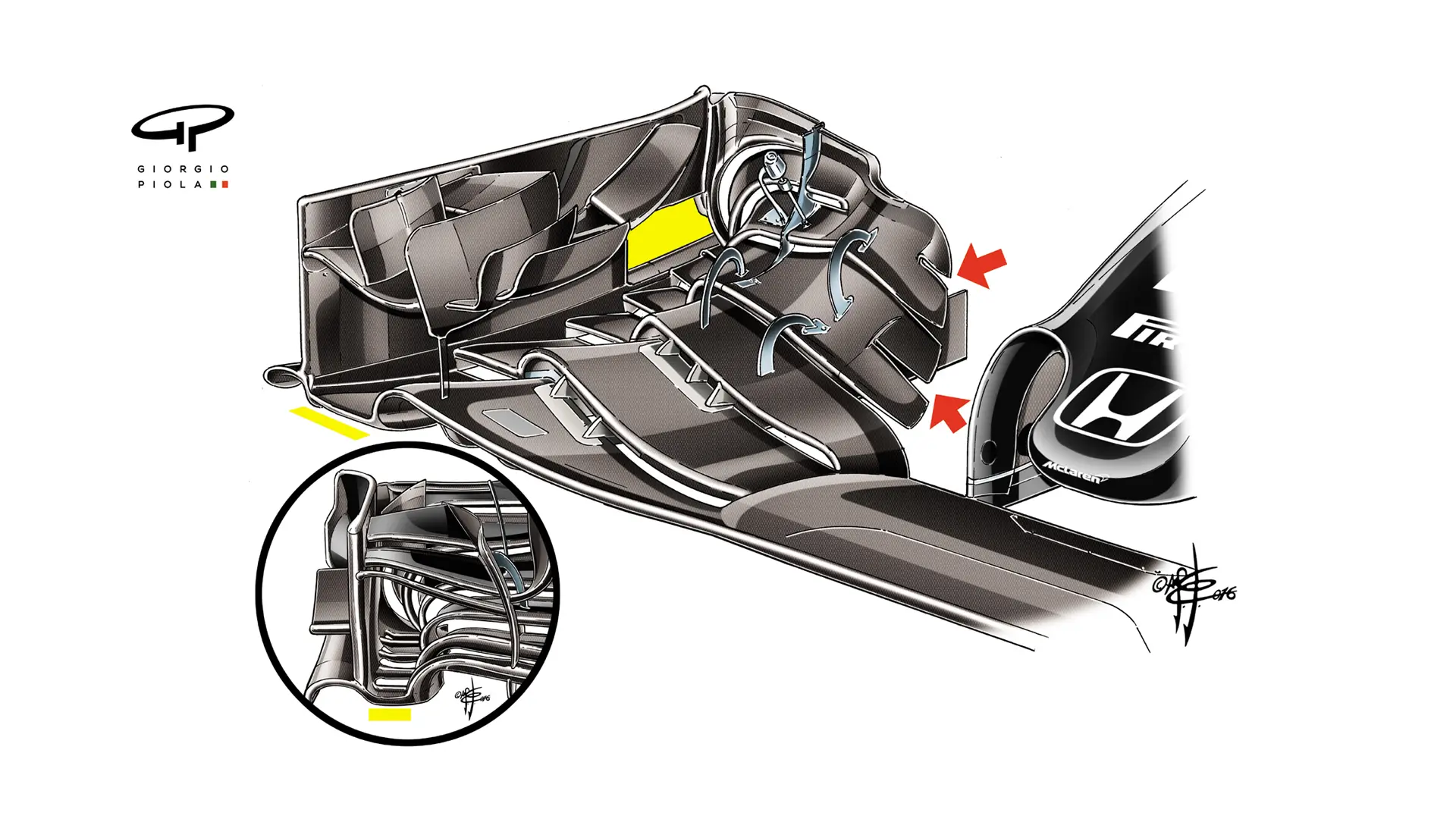
One of the standout updates came from McLaren, specifically their MP4-31 model. Jenson Button was the only driver to race with a cutting-edge front wing designed by Peter Prodromou, previously of Red Bull. The revisions to this component feature a much broader flat section adjacent to the endplate, complemented by a substantial cut in the endplate itself. "The new front wing has wider chords and a unique slot design near the center, enhancing aerodynamic performance," said Giorgio Piola, a well-known technical illustrator. The strategic choice for Fernando Alonso to stick with the old wing provided valuable data comparison between the two setups. Both drivers also tested new brake ducts, which were planned enhancements for the team’s performance.
"The new front wing has wider chords and a unique slot design near the center, enhancing aerodynamic performance,"
Ferrari's SF16-H model also witnessed significant changes, particularly with its brake duct design. The team opted for larger front brake ducts with an asymmetric layout, featuring three egg-shaped openings uniquely situated on one side of the car. This innovation plays a crucial role in managing brake heat and balancing tire temperatures, especially for the left-front tire, which experiences considerable load around the twisting Barcelona circuit.
"These updates are aimed at optimizing performance under intense conditions, and we're seeing benefits in terms of thermal management," noted a team representative from Ferrari. The introduction of these brake ducts reflects Ferrari's commitment to maintaining their competitive edge.
"These updates are aimed at optimizing performance under intense conditions, and we're seeing benefits in terms of thermal management,"

Force India made headlines as well, debuting what was essentially a B-spec version of their VJM09 car at this race. This update included a new chassis for Sergio Perez, along with revamped sidepods and an updated engine cover. Among these alterations, the front wing stood out with its deeper vertical steps and increased width. The upper flap underwent modifications too, showcasing a newly constructed curved vertical fin. "These details are crucial for improving airflow around the front tires, which is vital for our overall performance, especially in corners," explained a Force India engineer.
"These details are crucial for improving airflow around the front tires, which is vital for our overall performance, especially in corners,"
**Related:** [2024 NED Whisky Tasmania SuperSprint: Key Details Unveiled](/article/2024-ned-whisky-tasmania-supersprint-key-details-unveiled)
Impact and Legacy

As teams prepare for the upcoming test at the Circuit de Barcelona-Catalunya, the anticipation is high regarding how these changes will influence performance and reliability in the ongoing season. Each team’s innovation is not merely a response to competition but a reflection of a relentless pursuit of excellence in the intricate world of Formula 1.
With many developments to evaluate and the season proceeding, teams will continually adapt and enhance their strategies based on performance data accrued from these vital updates.