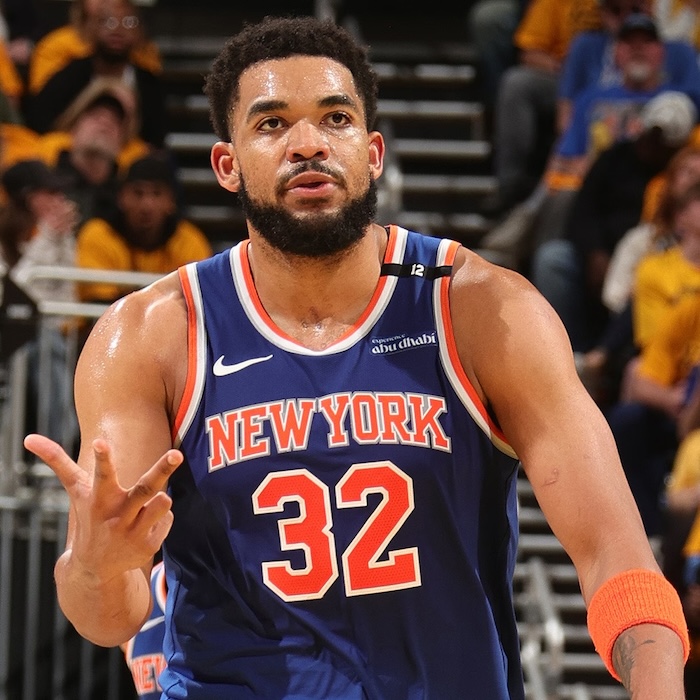
Karl-Anthony Towns stands as one of the NBA's most intriguing big men, a towering presence at 6-foot-11 who has redefined what it means to be a modern center. Now commanding a substantial $55.11 million salary while wearing number 32 for the New York Knicks, the Edison, New Jersey native represents both the evolution of the position and the franchise's commitment to building around elite talent.
Towns' journey to becoming one of the league's highest-paid centers reflects his unique skill set that bridges traditional post play with contemporary perimeter abilities. At 248 pounds, he possesses the physical tools to compete in the paint while maintaining the mobility and shooting touch that have become essential for centers in today's pace-and-space NBA.
The financial investment the Knicks have made in Towns signals their belief that he can serve as a cornerstone piece in their pursuit of championship contention. His maximum-level contract places him among the elite tier of NBA big men, a status he has earned through consistent production and versatility that few players at his position can match.


Towns' role with the Knicks extends far beyond traditional center responsibilities. His ability to stretch the floor creates spacing that opens driving lanes for guards and wings, while his rebounding prowess on both ends provides crucial second-chance opportunities and defensive stops. The combination of size, skill, and basketball IQ makes him a matchup nightmare for opposing defenses, who must account for his presence both inside and outside the three-point line.
From a technical standpoint, Towns' offensive repertoire is remarkably diverse for a player of his stature. His shooting mechanics are fundamentally sound, allowing him to contribute from multiple levels on the court. This versatility forces opposing big men to make difficult decisions about how to defend him, often pulling traditional centers away from the basket and compromising their team's rim protection.
**Related:** [Cam Waters Triumphs at Townsville 500 Amidst Intense Competition](/article/cam-waters-triumphs-at-townsville-500-amidst-intense-competition)

Defensively, Towns brings both rim protection capabilities and the lateral quickness to switch onto smaller players when necessary. His 6-foot-11 frame and 248-pound build provide the physical foundation to compete with the league's most imposing offensive threats in the post, while his basketball intelligence helps him anticipate plays and position himself effectively for rebounds and shot contests.
Impact and Legacy
The significance of Towns wearing number 32 for the Knicks cannot be understated in the context of the franchise's recent direction. Madison Square Garden has long been searching for a player capable of carrying the organization back to sustained playoff success, and Towns represents the type of two-way impact player who can anchor both ends of the floor for a contending team.


His New Jersey roots add an interesting geographical element to his tenure with the Knicks, as he brings a regional familiarity with the pressures and expectations that come with playing in the New York metropolitan area. This local connection could prove valuable as he navigates the intense media scrutiny and fan expectations that define the Knicks' environment.
Team Dynamics
The modern NBA has increasingly valued centers who can contribute beyond traditional post play, and Towns exemplifies this evolution. His ability to handle the ball, create shots for teammates, and threaten defenses from multiple areas of the court makes him a natural fit for contemporary offensive systems that prioritize spacing and ball movement.
Team Dynamics
From a team-building perspective, Towns' presence allows the Knicks significant flexibility in constructing their roster. His versatility means the organization can pair him with various types of forwards and guards without worrying about positional conflicts or spacing issues. This adaptability is particularly valuable in playoff scenarios where matchups and adjustments become crucial factors in series outcomes.
The investment the Knicks have made in Towns also reflects broader trends in NBA salary structure, where elite big men with his combination of size, skill, and production command maximum-level contracts. His $55.11 million salary represents not just his individual value, but the premium the league places on players who can impact winning at the center position.
Looking ahead, Towns' role with the Knicks will likely continue expanding as he develops chemistry with his teammates and becomes more integrated into the organization's long-term vision. His combination of youth, talent, and proven production suggests he could remain a central figure in the franchise's plans for years to come.
The pressure accompanying such a significant financial commitment is substantial, but Towns has consistently demonstrated the ability to perform at an elite level throughout his career. His professional approach and commitment to improvement suggest he is well-equipped to handle the expectations that come with being one of the Knicks' highest-paid players.
As the NBA continues evolving toward position-less basketball, players like Towns who can contribute across multiple areas become increasingly valuable. His presence gives the Knicks a foundation piece around which they can build a sustainable winner, making his substantial contract a potentially franchise-altering investment in their championship aspirations.