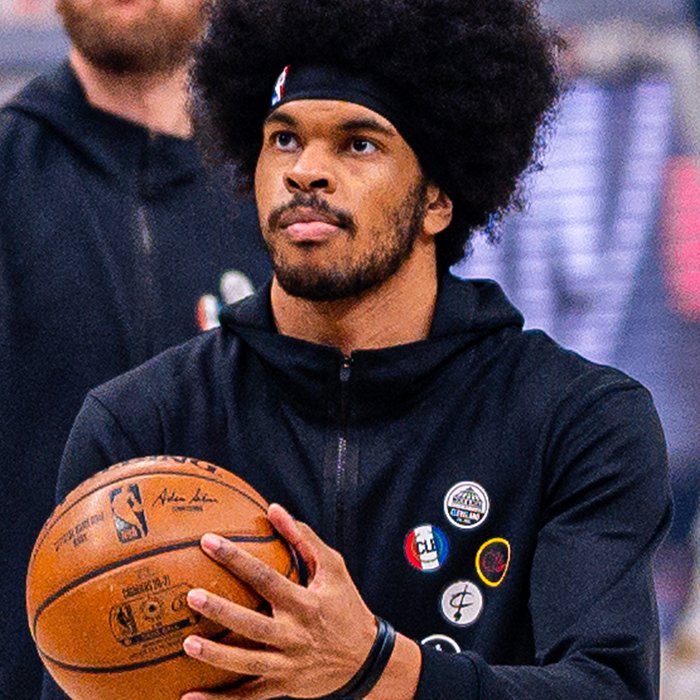
Standing tall at 6'11" and weighing 243 pounds, Jarrett Allen has quietly established himself as one of the NBA's most reliable centers, serving as the defensive anchor and rim protector for the Cleveland Cavaliers. The 25-year-old San Diego native has transformed from a promising Brooklyn Nets draft pick into a cornerstone player earning $20 million annually while wearing the number 31 jersey with pride in Cleveland.
Allen's journey to becoming Cleveland's defensive stalwart represents one of the more understated success stories in recent NBA history. Originally selected 22nd overall by the Brooklyn Nets in 2017 out of the University of Texas, Allen spent his formative years developing his craft in Brooklyn before finding his true home in Cleveland following a trade that has proven beneficial for all parties involved.
The California-born center brings a unique blend of athleticism, basketball IQ, and work ethic that has made him indispensable to the Cavaliers' system. His 6'11" frame allows him to patrol the paint effectively, while his mobility and conditioning enable him to switch on defense and run the floor in transition – qualities that have become increasingly valuable in today's pace-and-space NBA environment.

Career Journey
Allen's role within the Cavaliers' structure extends far beyond traditional center responsibilities. While he anchors the team's defense with his shot-blocking ability and rebounding prowess, his offensive game has evolved significantly since his early professional years. His improved screening technique creates opportunities for Cleveland's perimeter players, while his finishing around the rim provides a reliable scoring option in the half-court offense.
Impact and Legacy

The center's defensive impact cannot be overstated in Cleveland's recent success. His presence in the paint alters opposing teams' offensive strategies, forcing them to reconsider drives to the basket and settle for more difficult perimeter shots. This rim protection has been crucial in establishing the Cavaliers as a competitive force in the Eastern Conference, providing the defensive foundation necessary for sustained success.
**Related:** [Jai Lucas, Shelton Henderson, Dante Allen](/article/jai-lucas-shelton-henderson-dante-allen)
Race Results
Offensively, Allen has developed into a dependable pick-and-roll partner, utilizing his size and athleticism to finish strong at the rim. His understanding of positioning and timing has improved dramatically, allowing him to maximize scoring opportunities without requiring plays specifically designed for him. This efficiency makes him an ideal complement to Cleveland's ball-handlers and creates a balanced offensive attack.

Allen's rebounding ability represents another crucial aspect of his value proposition. His combination of size, positioning, and effort on the boards provides Cleveland with second-chance opportunities while limiting opponents' offensive rebounds. This two-way impact on the glass contributes significantly to the team's overall competitiveness and helps control game tempo.
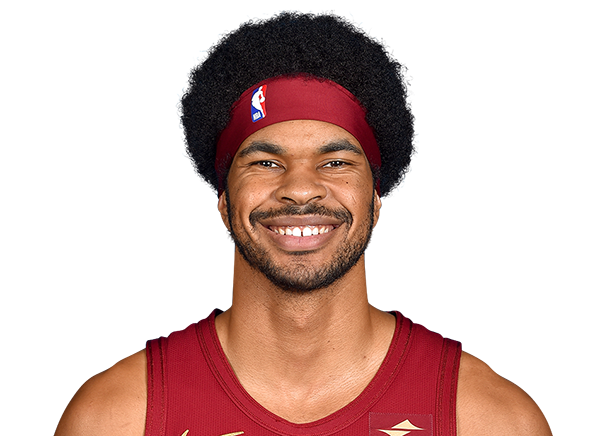
The financial investment Cleveland has made in Allen, reflected in his $20 million annual salary, demonstrates the organization's commitment to building around reliable, two-way players. In an era where center salaries can reach astronomical figures, Allen's contract represents solid value for a player who contributes across multiple statistical categories while maintaining excellent availability and professionalism.
Allen's conditioning and durability have been consistent strengths throughout his career. His ability to play significant minutes while maintaining effectiveness late in games provides Cleveland's coaching staff with tactical flexibility. Whether the game situation calls for traditional post defense, switching schemes, or small-ball lineups, Allen's versatility allows the Cavaliers to adapt their approach based on matchups and game flow.
The center's basketball intelligence continues to develop as he gains experience in Cleveland's system. His understanding of help defense positioning, communication with teammates, and recognition of offensive opportunities has improved steadily. This growth trajectory suggests that Allen's best years may still be ahead of him, despite already establishing himself as a quality starter.
Looking ahead, Allen's role in Cleveland's future plans appears secure. His combination of age, skill set, and contract situation aligns perfectly with the organization's competitive timeline. As the Cavaliers continue building their roster around a core of talented players, Allen's presence provides stability and reliability that championship-contending teams require.
The transformation from his early days as a developing prospect to his current status as a dependable starter illustrates Allen's work ethic and commitment to improvement. His journey from San Diego to Texas to Brooklyn and finally to Cleveland represents the modern NBA player's path to finding the right organizational fit.
Allen's impact extends beyond individual statistics to encompass leadership qualities and professionalism that benefit Cleveland's locker room culture. His approach to preparation and game-to-game consistency sets an example for younger players while providing veteran leadership despite his relatively young age.
As the NBA continues evolving toward position-less basketball, Allen's ability to fulfill traditional center responsibilities while adapting to modern defensive concepts makes him increasingly valuable. His combination of size, athleticism, and basketball IQ positions him well for continued success in Cleveland's system and the league's changing landscape.