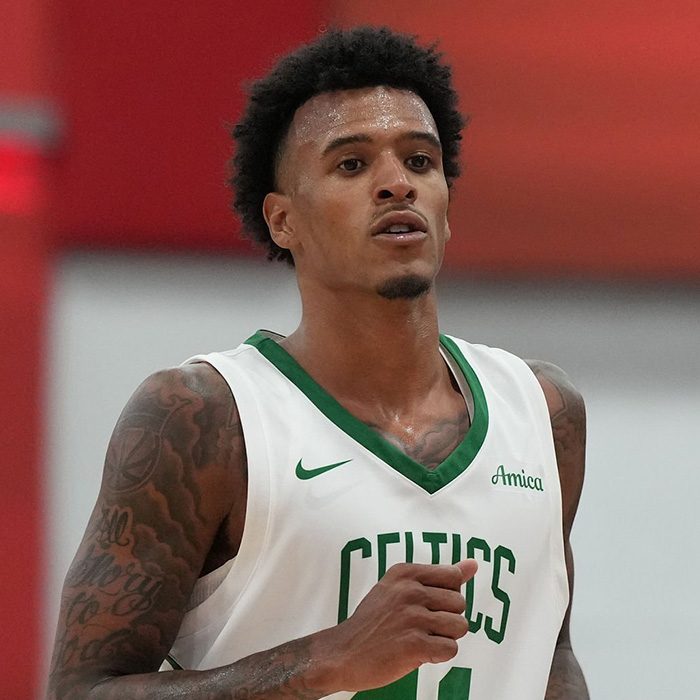
Standing 6'8" and weighing 225 pounds, Jalen Bridges represents the modern NBA forward prototype that the Boston Celtics have strategically cultivated in recent years. The 23-year-old from Fairmont, West Virginia, has quietly established himself as a valuable rotational piece for one of the league's most successful franchises, earning his $2.05 million salary through consistent development and adaptability.
Bridges, who wears number 41 for the Celtics, embodies the versatility that head coach Joe Mazzulla prizes in his system. At small forward, he possesses the size to defend multiple positions while maintaining the agility necessary to keep pace with today's positionless basketball. His 6'8" frame allows him to seamlessly switch between guarding opposing wings and smaller forwards, a crucial skill in Boston's defensive schemes.
The West Virginia native's journey to the NBA wasn't conventional. After a standout collegiate career, Bridges faced the challenging transition that many young players encounter when adapting to the league's speed and physicality. However, his work ethic and basketball IQ have enabled him to carve out a meaningful role within Boston's deep rotation.

What makes Bridges particularly valuable to the Celtics is his understanding of his role and limitations. Rather than attempting to exceed his current skill set, he focuses on executing the fundamentals that keep him on the court. His 225-pound frame provides adequate strength to battle in the paint when needed, while his mobility allows him to contribute on the perimeter.
Defensively, Bridges has shown the ability to guard players ranging from athletic shooting guards to power forwards, though he's most effective against traditional small forwards. His length disrupts passing lanes, and he's developed a reputation among teammates and coaches for his preparation and film study. This cerebral approach to the game has accelerated his development and increased his court time.
**Related:** [Rhode Island RIBridges Cyberattack May Expose Personal Data](/article/rhode-island-ribridges-cyberattack-may-expose-personal-data)

Race Results
Offensively, Bridges operates within Boston's ball-movement system, focusing on efficient shot selection and timely cuts to the basket. While he may not be a primary scoring option, his ability to knock down open three-pointers and finish around the rim makes him a credible threat that opposing defenses must account for. His basketball IQ shines in transition situations, where he demonstrates good court vision and decision-making.
Looking Ahead
The Celtics' investment in Bridges reflects the organization's commitment to developing young talent while maintaining competitive excellence. At $2.05 million, he represents excellent value for a player who provides both present contributions and future potential. This salary structure also allows Boston flexibility in roster construction while giving Bridges an opportunity to prove himself worthy of a larger role.


By the Numbers
Bridges' development trajectory suggests he could become a more prominent contributor as he gains experience. His work ethic, combined with Boston's player development infrastructure, creates an environment conducive to continued growth. The organization's track record of maximizing player potential bodes well for his future prospects.
From a team chemistry perspective, Bridges has integrated well into Boston's culture. Veterans have praised his professionalism and willingness to learn, while his positive attitude during limited playing time demonstrates the maturity that successful role players must possess. This mindset is particularly important on a championship-contending team where playing time fluctuates based on matchups and game situations.
Looking ahead, Bridges faces the challenge of expanding his skill set while maintaining the reliability that earned him his current role. Areas for improvement include developing a more consistent three-point shot and enhancing his playmaking abilities. However, his physical tools and basketball intelligence provide a solid foundation for continued development.
The small forward position in today's NBA demands versatility, and Bridges possesses many of the attributes necessary for long-term success. His size allows him to play bigger when needed, while his mobility enables him to defend smaller, quicker opponents. This flexibility is invaluable in playoff situations where matchup advantages can determine series outcomes.
Bridges represents the type of player that championship teams require – someone who understands his role, executes it consistently, and remains ready when called upon. While he may not generate headlines like Boston's star players, his contributions are meaningful within the team's broader objectives.
As the season progresses, Bridges' development will be worth monitoring. His combination of size, athleticism, and basketball IQ suggests he has untapped potential that could emerge with increased opportunity and continued refinement of his skills. For now, he remains a solid rotational piece on a talented roster, but his ceiling appears higher than his current role might suggest.
In an era where NBA success increasingly depends on roster depth and versatility, players like Jalen Bridges provide the foundation that allows star players to shine. His journey from Fairmont to Boston represents the kind of developmental success story that reflects well on both player and organization.