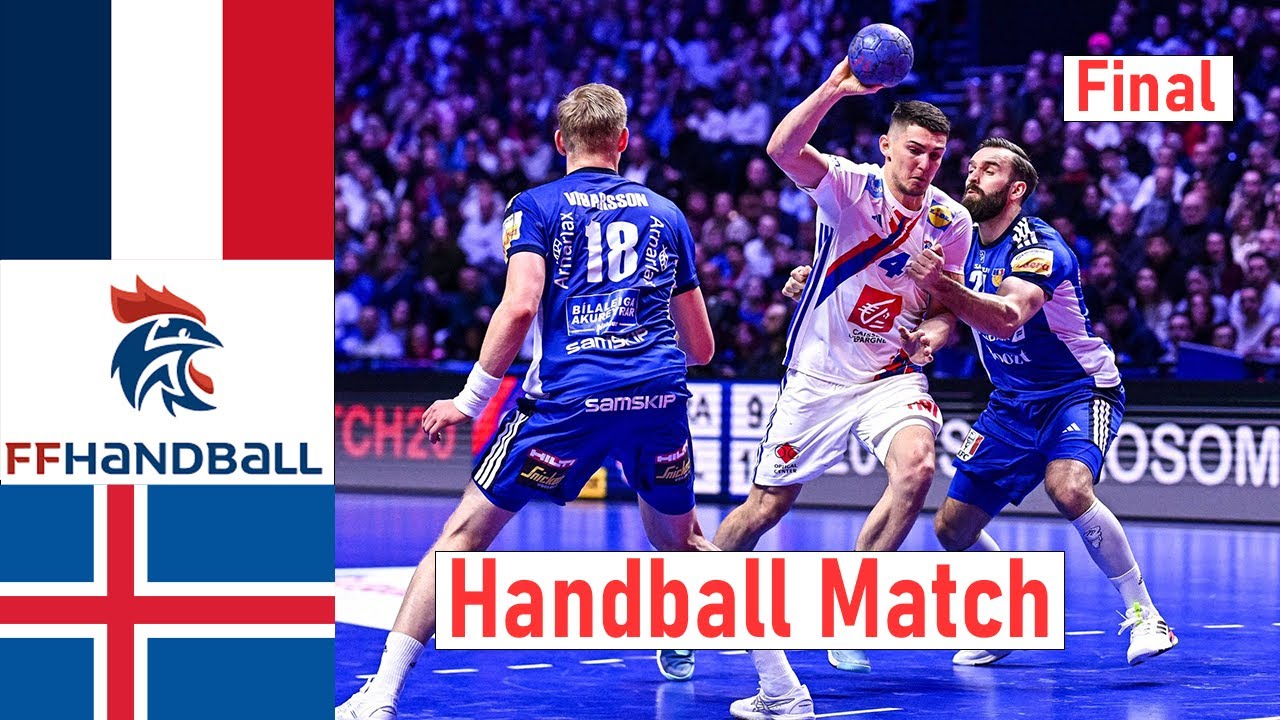
A bruising 31-29 final defeat to France in the Tournoi de France was not the result Iceland's Snorri Steinn Gudjonsson wanted, but it confirmed something the European handball world has been tracking quietly for two years: the Icelandic project is producing high-end shooters and high-end defenders, and is no longer just punching a tournament card.
Iceland's tactical centrepiece in Paris was distance shooting. "Ça navigue de loin pour les Islandais," the French broadcast noted, the Vikings repeatedly drawing France's first defensive line out of position before unloading from nine metres. The strategy worked for long stretches, with France unable to consistently disrupt the receiving angles for left-wing finisher Ellidi.
Elidi, a 22-year-old plying his trade in the Bundesliga, was singled out by commentators as already among the elite finishers in his position. Combined with the experienced Vespur Hugo Descat at the back-court, Iceland's set-piece offence ran clean shapes for the first half.
The match also showcased Gudjonsson's defensive ambition. Iceland's high block on France's pivots, including captain Ludovic Fabregas, occasionally locked France out of central angles entirely, an approach that mirrors the high-aggression model favoured by Spain and Germany.
What ultimately undid Iceland was inability to absorb France's second-half wing transitions. Goalkeeper Charles Bolzinger's saves into Aymeric Minne and Dylan Nahi's wing channels broke open the contest. The decisive moment came in the dying seconds when Nahi finished into an empty net to push France two clear.
"Voilà, c'est gagné. Il avait le boulot Dylan parce que c'était très mal engagé," the commentary read, conceding that France had been in trouble before Dylan Nahi's late impact.
For Gudjonsson, who took over an Icelandic side coming out of a long developmental rebuild, the takeaway is dual. Iceland kept France honest for nearly 60 minutes and held a fully-resourced French squad to a two-goal margin in their own building. The shot-clock discipline at distance was the kind of patience usually associated with Scandinavian neighbours Denmark and Norway, but Iceland's transition coverage when France switched modes still needs tightening.
The tournament was always going to be a stiff test ahead of EHF EURO 2026. Iceland's draw at the championship is unforgiving, but the Paris evidence is that Vespur, Ellidi and emerging midfielders such as Aron Pall Snorrason can stretch any back-court in Europe.
The match capped a Tournoi de France that confirmed several pre-tournament assumptions: France remain the team to beat at home, but the gap to Iceland is now slim. The Vikings came within two goals of a major scalp, and they leave Paris with concrete evidence that their own EHF EURO group should be a knockout-stage assignment, not a survival exercise.
Gudjonsson's challenge in the next ten days is squeezing more from his bench before the championship begins. France start their group on Thursday before facing Austria on Friday. Iceland will be operating in a different group, but their performance level, six saves from goalkeeper Olafsson included, suggests they will not be there to make up numbers.
Iceland leave the capital with a runners-up trophy, and a credibility upgrade on every coach's tournament whiteboard.