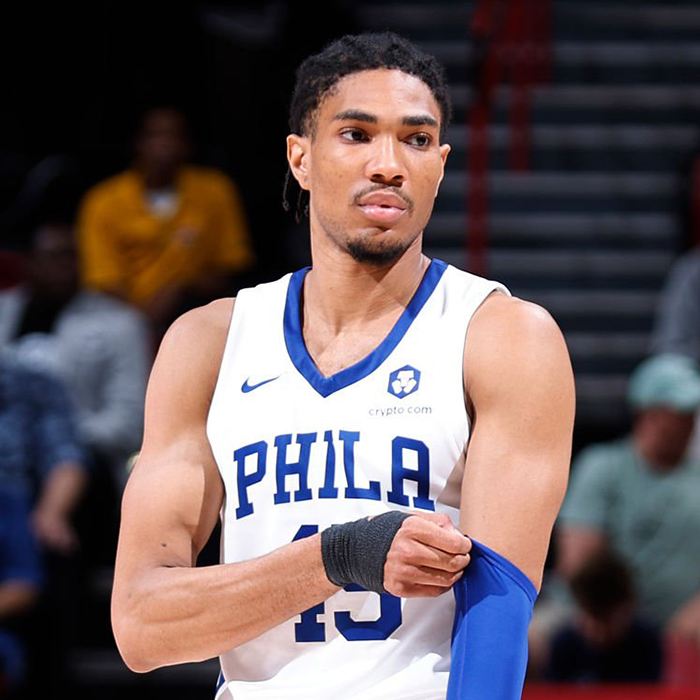
Hunter Sallis has embarked on a journey that many young basketball players only dream of, transitioning from the basketball courts of Omaha, Nebraska, to the bright lights of the NBA with the Philadelphia 76ers. At 6 feet 5 inches and 185 pounds, the shooting guard wearing number 45 represents the type of developmental talent that NBA franchises are increasingly prioritizing in their roster construction.
The Omaha native's path to professional basketball showcases the modern trajectory of player development in today's NBA landscape. Standing at an ideal height for his position, Sallis possesses the physical attributes that make him an intriguing prospect for Philadelphia's backcourt rotation. His frame suggests room for continued physical development, which could prove crucial as he adapts to the increased physicality and pace of professional basketball.
Philadelphia's decision to bring Sallis into their organization reflects the franchise's commitment to building depth and identifying players who can contribute to their championship aspirations. The 76ers have historically shown patience with developing young talent, and Sallis fits the profile of a player who could benefit from their player development infrastructure.

From a positional standpoint, Sallis brings versatility to Philadelphia's backcourt. At 6'5", he possesses the length to defend multiple positions while maintaining the agility typically associated with guards. This dimensional advantage allows him to potentially guard both traditional point guards and shooting guards, providing defensive flexibility that modern NBA teams covet. His wingspan and height create natural passing lanes disruption opportunities, while his frame suggests he can absorb contact when driving to the basket.
Team Dynamics
Offensively, Sallis's role within the 76ers system will likely focus on spacing the floor and providing secondary scoring options. His shooting guard designation indicates an emphasis on perimeter shooting, ball movement, and creating scoring opportunities both for himself and teammates. The modern NBA places premium value on players who can stretch defenses with three-point shooting while remaining active in ball movement schemes.
**Related:** [Aaron Nesmith Finding His Stride: How the Former Celtic Has Carved Out a Key Role in Indiana's Backcourt](/article/aaron-nesmith-finding-his-stride-how-the-former-celtic-has-carved-out-a-key-role-6d6734)
The developmental aspect of Sallis's current situation cannot be understated. Young players entering the NBA face significant adjustments in terms of game speed, defensive intensity, and overall physicality. His 185-pound frame, while athletic, suggests areas for potential strength development that could enhance his effectiveness in physical matchups against more experienced NBA veterans.
Impact and Legacy
Philadelphia's coaching staff will likely focus on several key areas of development for Sallis. Defensive consistency remains paramount for any young player seeking meaningful minutes in competitive situations. The 76ers have established defensive principles that require buy-in from every rotation player, regardless of experience level. Sallis's length provides natural defensive tools, but translating those physical attributes into consistent defensive impact requires experience and refinement.
Offensively, shot selection and decision-making typically represent primary development focuses for young guards. The NBA game demands quick decision-making in high-pressure situations, requiring players to process defensive rotations and make appropriate choices with limited time. Sallis's development in these areas will largely determine his long-term role within Philadelphia's system.
The financial aspects of Sallis's situation, while undisclosed, likely reflect the NBA's structured approach to rookie contracts and developmental deals. This arrangement provides both player and organization with flexibility while establishing clear performance benchmarks and development goals.
Race Results
Looking at Philadelphia's roster construction, Sallis enters an organization with established veteran leadership and championship aspirations. This environment can prove beneficial for young players willing to learn and adapt quickly. The presence of experienced teammates provides mentorship opportunities while competitive roster spots ensure that development occurs within a results-oriented framework.
The geographic transition from Nebraska to Philadelphia represents more than just a change of scenery. Moving from the Midwest to one of America's most passionate basketball markets brings increased scrutiny, higher expectations, and greater opportunities for exposure. Philadelphia fans are known for their basketball knowledge and demanding standards, which can accelerate player development through constant feedback and engagement.
Sallis's jersey number 45 connects him to a tradition of players who have worn that number throughout NBA history. While numbers themselves hold little competitive value, they often represent personal significance or organizational assignment that reflects a player's role within team culture.
As the NBA continues evolving toward position-less basketball, players like Sallis who possess multi-positional capabilities become increasingly valuable. His combination of height, athleticism, and guard skills aligns with modern basketball trends emphasizing versatility and adaptability.
The ultimate measure of Sallis's success with Philadelphia will depend on his ability to translate physical tools into consistent production. Young players who maximize development opportunities often find themselves with expanded roles and long-term organizational commitment. Conversely, the competitive nature of professional basketball demands continuous improvement and adaptation.
Hunter Sallis represents the type of calculated investment that NBA franchises make in pursuit of sustainable success. His journey from Nebraska to Philadelphia embodies the opportunity and challenge that define professional basketball careers, with his development serving as a compelling storyline worth monitoring throughout his tenure with the 76ers.