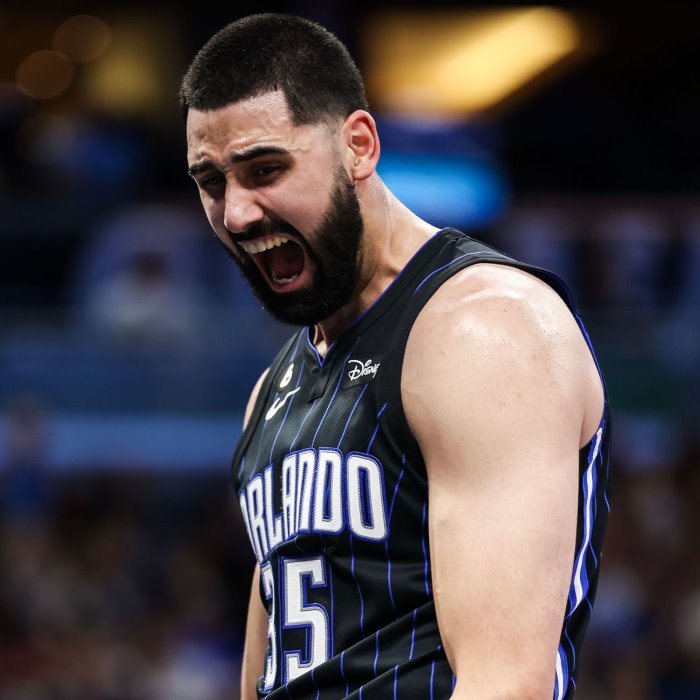
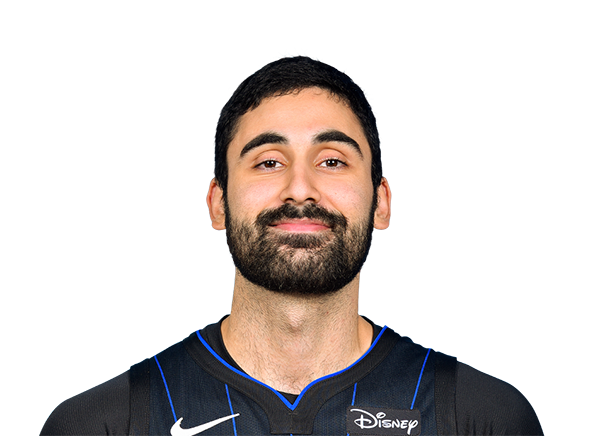
Standing at 6-foot-11 and weighing 250 pounds, Goga Bitadze cuts an imposing figure in the paint for the Orlando Magic. The 25-year-old center from Sagarejo, Georgia, has embarked on a journey that has taken him from the basketball courts of his homeland to the bright lights of the NBA, where he continues to develop his craft while earning a respectable $8.33 million annually.
Bitadze's path to the NBA has been anything but conventional. Born in the small Georgian town of Sagarejo, he developed his basketball skills in a country where the sport, while popular, doesn't produce NBA talent with the frequency of traditional basketball powerhouses. His journey through European basketball before landing in the league has given him a unique perspective and skill set that the Magic are working to maximize.
Wearing number 35 for Orlando, Bitadze represents the modern NBA center archetype – a player who combines traditional interior presence with the versatility demanded by today's pace-and-space game. His 6-11 frame provides the Magic with legitimate size in the frontcourt, an asset that has become increasingly valuable as teams search for players who can protect the rim and provide a physical presence in the paint.
The Georgian center's role with the Magic has evolved as he's gained experience in the league. His size and length make him a natural fit for defensive schemes that require rim protection, while his European basketball background has given him a foundation in fundamental skills that many American-born centers sometimes lack. This combination has made him a valuable rotation piece for a Magic team that has been building its identity around young talent and defensive intensity.
Impact and Legacy
Bitadze's strengths lie primarily in his interior presence and basketball IQ. His height advantage allows him to alter shots and grab rebounds in traffic, while his understanding of positioning – honed through years of European competition – helps him maximize his impact even when he's not stuffing the stat sheet. The center has shown flashes of offensive capability, particularly in the post and as a screen-and-roll target, though consistency in this area remains a work in progress.
**Related:** [Newgarden Captures Historic 33rd Chevrolet Victory at Phoenix](/article/newgarden-captures-historic-33rd-chevrolet-victory-at-phoenix)
One of the most intriguing aspects of Bitadze's game is his passing ability. European-trained big men often possess superior court vision compared to their American counterparts, and Bitadze is no exception. His ability to find open teammates from the high post or after drawing double teams adds a dimension to Orlando's offense that coaches can utilize in specific situations.
Championship Implications
Defensively, Bitadze brings the kind of rim protection that championship teams require. His length and timing allow him to challenge shots without always going for spectacular blocks, understanding that changing a shot's trajectory can be just as valuable as swatting it into the stands. This mature approach to defense reflects his European training, where fundamental soundness often takes precedence over highlight-reel plays.


Career Journey
The Magic's investment in Bitadze, evidenced by his current salary, suggests the organization sees him as more than just a stop-gap solution. At 25, he's entering what should be the prime years of his career, with enough experience to contribute meaningfully while still having room for growth and improvement.
Physically, Bitadze's 250-pound frame gives him the bulk to bang with some of the league's premier centers while maintaining enough mobility to switch on screens and recover defensively. This balance is crucial in an era where centers must be able to defend multiple positions and contribute in various schemes.
For the Magic, Bitadze represents a piece of their ongoing rebuild and development process. The team has invested heavily in young talent across multiple positions, and having a reliable center who can provide stability and veteran presence – despite his relatively young age – allows the organization to continue developing its core while remaining competitive on a nightly basis.
Looking ahead, Bitadze's continued development will likely focus on consistency and expanding his offensive repertoire. While he has shown the ability to contribute in various areas, turning those flashes into reliable production will determine how significant his role becomes within Orlando's long-term plans.
The center's journey from Sagarejo to Orlando represents not just personal achievement but also the increasingly global nature of the NBA. As the league continues to expand its international reach, players like Bitadze serve as bridges between different basketball cultures, bringing unique skills and perspectives that enrich the overall product.
As the Magic continue their rebuilding process, Bitadze's role as a steady veteran presence becomes increasingly important. His combination of size, skill, and basketball intelligence provides the team with options and flexibility, whether as a starter or coming off the bench in crucial situations. For a player who has already overcome significant geographic and cultural barriers to reach the NBA, the next phase of his career will determine whether he can establish himself as a long-term contributor in the world's premier basketball league.