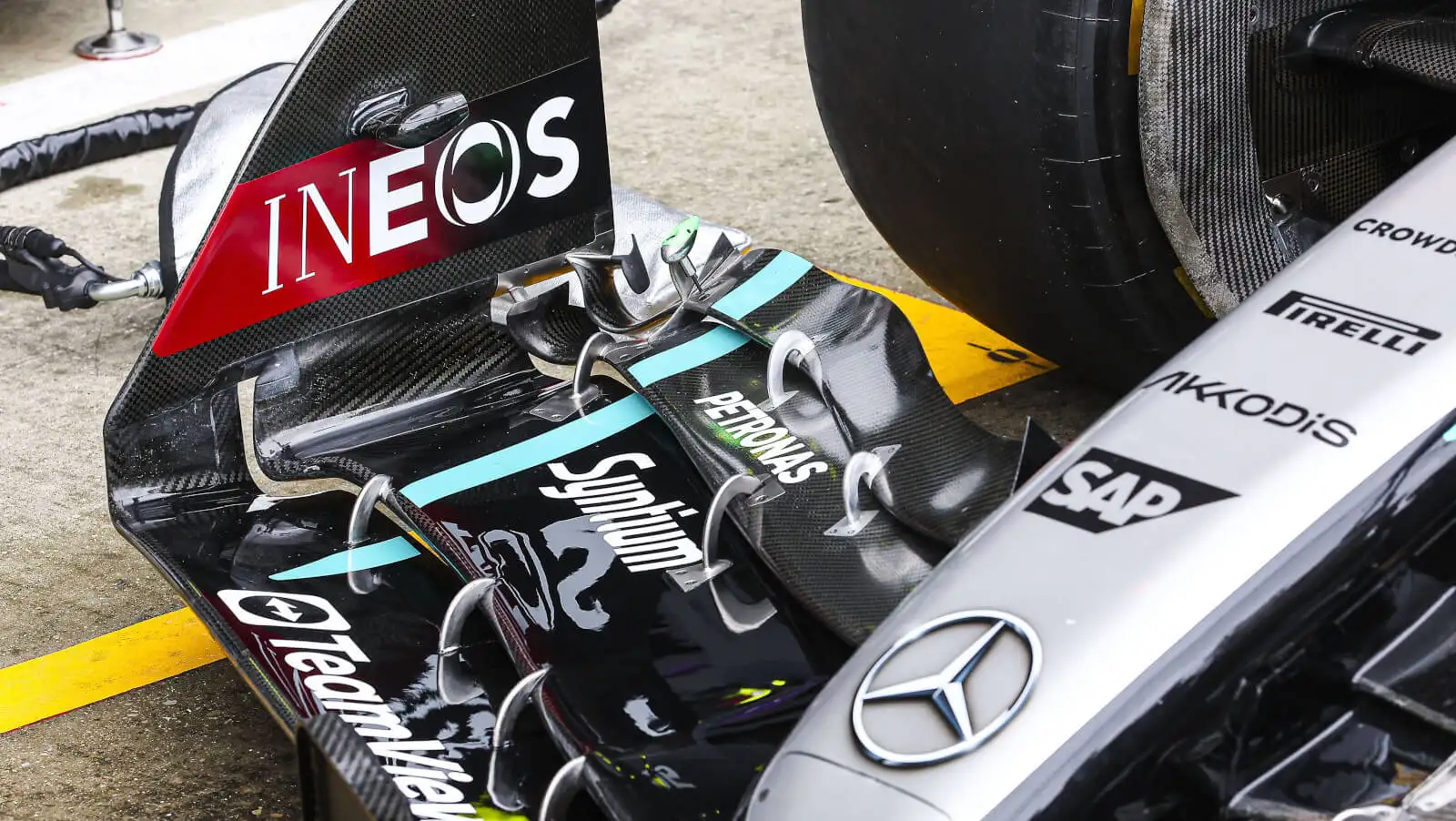
The spotlight in Formula 1 has turned to the newly engineered front flexi-wings developed by both Mercedes and McLaren. This shift comes in the wake of Red Bull raising concerns with the FIA about rival designs, reigniting discussions around this contentious aerodynamic feature that could impact the championship dynamics as the season progresses.
Since the inception of the ground effect era in 2022, teams have faced the challenges posed by evolving regulations. "Engineers have been striving to fully understand this system and maximise its potential," said one leading analyst. The current regulations mandate that the center of maximum downforce be closer to the rear of the vehicle, contrasting significantly with the design flexibility permitted during the aerodynamic heyday of the 1980s.
"Engineers have been striving to fully understand this system and maximise its potential,"
This shift has led to intricate design challenges. Teams are grappling with a phenomenon where cars often understeer in slow corners due to increased rear downforce, but transition into oversteer in high-speed situations when ground effects take over. "Finding the perfect balance is one of the toughest tasks for our engineers," explained a senior team member at Mercedes.
"Finding the perfect balance is one of the toughest tasks for our engineers,"
Achieving this balance involves careful consideration of several elements including suspension, ride height, and notably, the front wing's aerodynamics. As the foundational element directing airflow, a well-designed front wing can provide significant competitive advantages. "If we can smartly leverage flexible wings, we can further optimise our performance," noted a McLaren strategist.

"If we can smartly leverage flexible wings, we can further optimise our performance,"
Flexi-wings operate under a cleverly calculated principle, remaining compliant with FIA regulations while adjusting to varying track conditions. The FIA conducts rigorous static tests, ensuring that any deformation of the front wing does not exceed 3mm under a 60N vertical force. With this adaptability, teams seek to adjust downforce levels appropriately at different speeds, creating stability at low speeds while minimizing drag on long straights.
**Related:** [F1 Commission Tackles 2026 Regulations Challenges and Innovations](/article/f1-commission-tackles-2026-regulations-challenges-and-innovations)
Team Dynamics

Both Mercedes and McLaren have recently employed these techniques to their advantage. Mercedes debuted its latest front wing design at the Monaco Grand Prix, although it was George Russell who had the chance to experience its effects. The team opted to forgo their previous 'legality wire' construction, a decision that raised eyebrows among insiders.
Race Results
As the team sought to calibrate their upgrades, the true benefits became evident at the Canadian Grand Prix, where Russell clinched the team's first pole position of the season. “It was phenomenal to see immediate results, marking the start of our resurgence,” Russell shared. This significant aerodynamic improvement at high speeds allowed Mercedes drivers, especially on fast corners and straights, to excel, though they encountered challenges in slower turns.
Race Results
Following this, Lewis Hamilton added another podium finish in Barcelona, with two sequential victories in Austria and Silverstone, marking an inspiring turnaround. “To come from a place where we weren’t contending for podiums to now winning races is remarkable,” Hamilton remarked after celebrating on home turf.
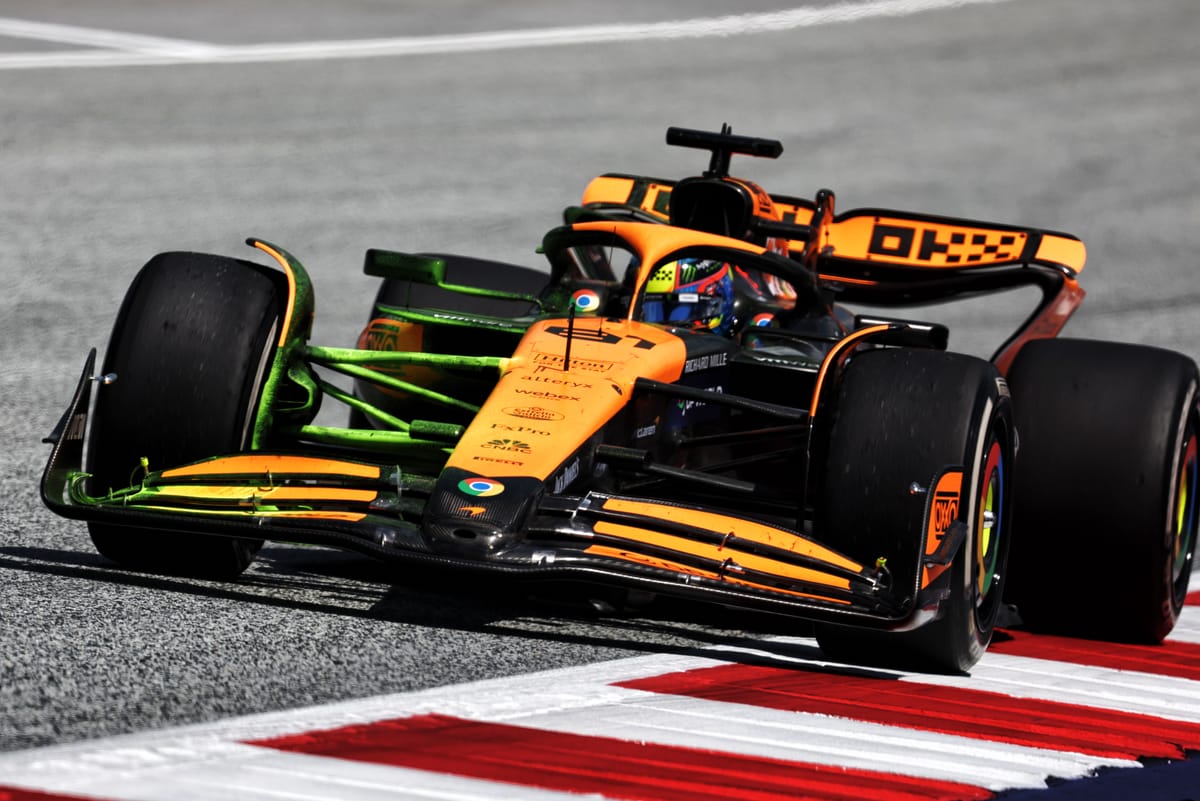
Meanwhile, McLaren embarked on parallel development, debuting a redesigned front wing during the Miami race, which directly contributed to Lando Norris’s breakthrough victory. As they continue refining their design, McLaren engineers recognized the need to enhance front-end stability, especially in slow corners. “We’ve tailored our vanes to energize airflow under lower speeds,” explained a McLaren engineer.
The effectiveness was validated in a wet race at Silverstone, where McLaren exhibited superior performance, compelling the racing community to consider their formidable traction on the track. The continuing rivalry highlights a crucial moment in the season, as strategic innovations in aerodynamics could redefine competitive dynamics.
As Mercedes and McLaren unveil their redesigned wings, the ongoing competition with Red Bull will remain intense, especially with teams pushing the envelope of technology and performance. With each race, the flutter of wings and the roar of engines hints at an exhilarating finish to an already captivating 2024 season.