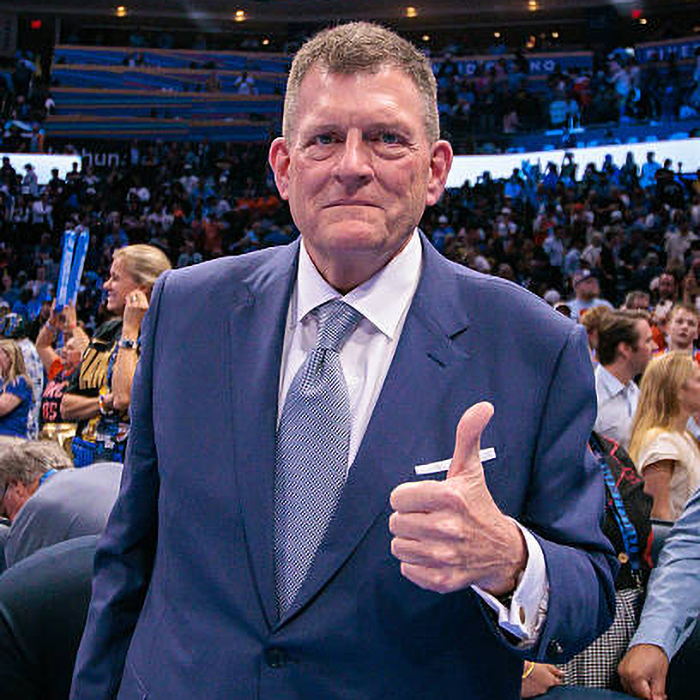
Clay Bennett stands as one of the most influential figures in modern NBA history, not for his prowess on the basketball court, but for his transformative role as Chairman of the Oklahoma City Thunder. A native son of Oklahoma City, Bennett has orchestrated one of professional sports' most successful franchise relocations and established the Thunder as a cornerstone of the community he calls home.
Born and raised in Oklahoma City, Bennett's journey to NBA ownership reflects a deep-rooted connection to his hometown that would ultimately shape the landscape of professional basketball in the American heartland. His path to the chairman's office began in the business world, where he built a successful career in various ventures before setting his sights on bringing major league professional sports to Oklahoma.
The defining moment of Bennett's tenure came in 2006 when he led a group of investors in purchasing the Seattle SuperSonics for $350 million. What followed was a complex and often controversial two-year process that culminated in the franchise's relocation to Oklahoma City in 2008, where it was rechristened the Thunder. The move marked the first NBA franchise relocation since 1985 and represented Bennett's vision of establishing Oklahoma City as a legitimate major league sports market.

As Chairman, Bennett has overseen the Thunder's remarkable transformation from a relocated franchise to one of the NBA's most respected organizations. Under his leadership, the Thunder has achieved unprecedented success both on and off the court. The franchise reached the NBA Finals in 2012, just four years after the relocation, and has consistently maintained competitive rosters while building a passionate fanbase that regularly sells out Paycom Center.
Bennett's approach to franchise management emphasizes long-term sustainability and community integration. His leadership philosophy centers on creating a basketball culture that extends beyond the arena, fostering deep connections with Oklahoma City residents and establishing the Thunder as more than just a sports team – but as a source of civic pride and identity.
**Related:** [SEC Chairman Calls for Robust Regulations to Enhance Crypto Market Stability](/article/sec-chairman-calls-for-robust-regulations-to-enhance-crypto-market-stability)
One of Bennett's greatest strengths lies in his ability to balance competitive aspirations with financial responsibility. The Thunder organization has gained recognition throughout the NBA for its shrewd roster construction and player development programs. Under Bennett's oversight, the franchise has consistently competed at a high level while maintaining fiscal discipline, a approach that has earned respect from peers across the league.
The Chairman's commitment to his Oklahoma roots runs deeper than business considerations. Bennett has positioned himself as a champion of Oklahoma City's growth and development, using the Thunder's platform to showcase the city on a national stage. His efforts have contributed significantly to changing perceptions of Oklahoma City as a destination for major league sports and entertainment.
Impact and Legacy
Bennett's influence extends beyond day-to-day operations to long-term strategic planning. He has been instrumental in securing significant improvements to the Thunder's home venue and has worked closely with city officials to ensure the franchise remains anchored in Oklahoma City for generations to come. His negotiation of a new arena deal demonstrates his commitment to the market and his ability to build consensus among various stakeholders.
The Chairman's leadership style emphasizes collaboration and communication. He has built strong relationships with NBA commissioners, fellow owners, and league officials while maintaining focus on the Thunder's unique position as the lone major professional sports franchise in Oklahoma. This dual perspective – understanding both local market dynamics and league-wide trends – has proven invaluable in positioning the Thunder for sustained success.
Bennett's stewardship has also been marked by his handling of high-profile player departures and roster transitions. His ability to maintain organizational stability during periods of significant change has earned recognition from basketball analysts and industry observers. The Thunder's continued competitiveness despite roster turnover reflects the strong foundation Bennett has established.
By the Numbers
Looking toward the future, Bennett faces the ongoing challenge of maintaining the Thunder's competitive edge in an increasingly complex NBA landscape. His approach to franchise management will be tested as the league continues to evolve, but his track record suggests a leader capable of adapting to changing circumstances while staying true to core principles.
By the Numbers
The Chairman's impact on Oklahoma City extends far beyond basketball statistics and win-loss records. His decision to bring NBA basketball to his hometown has catalyzed broader economic and cultural development throughout the region. The Thunder's presence has elevated Oklahoma City's national profile and contributed to a sense of big-league identity that resonates throughout the community.
As the Thunder continues to build toward future success, Bennett's role as Chairman remains central to the franchise's identity and aspirations. His unique position as both a successful businessman and Oklahoma City native provides perspective that shapes every aspect of the organization's operations and community engagement efforts.