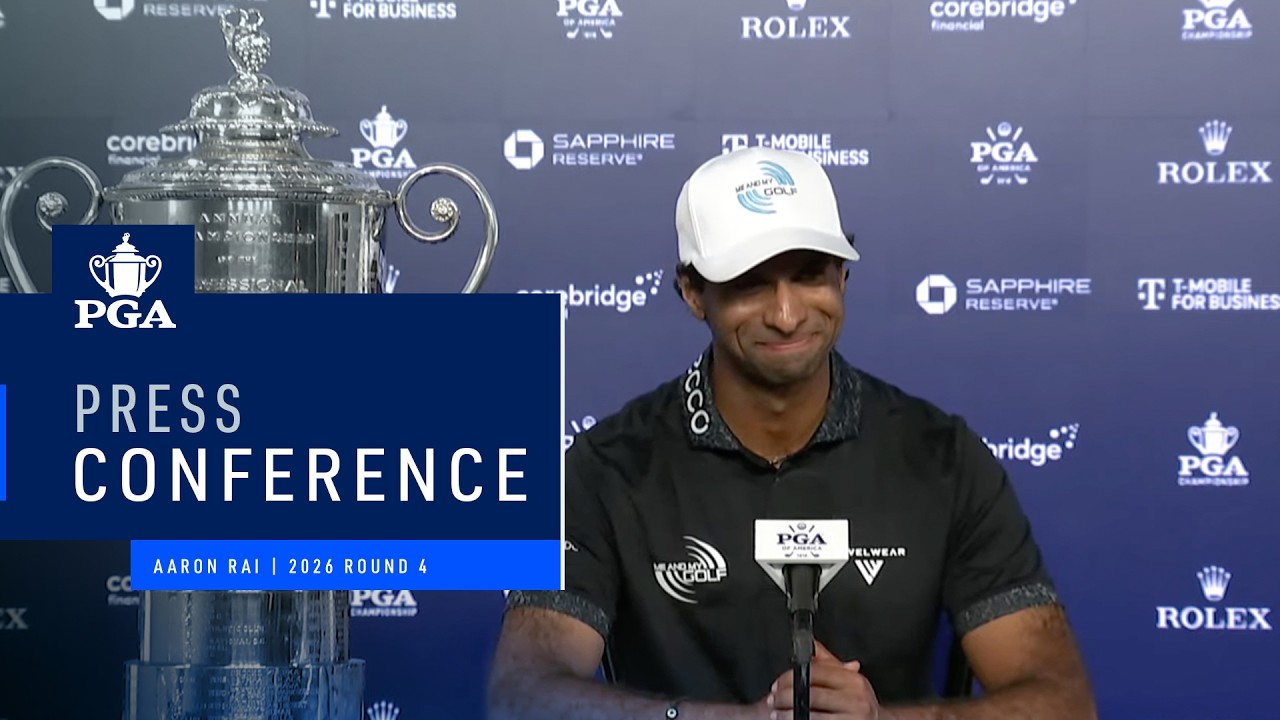
Aaron Rai is the first English-born winner of the PGA Championship in 109 years, but the new major champion was clear in his Aronimink press conference that the description tells only part of the story. The 31-year-old's family tree runs from Wolverhampton through Kenya and back to Punjab, and Rai treated all three threads as inseparable from his Wanamaker Trophy.
Asked on Sunday evening what it meant to put a face like his on modern English sporting success, Rai answered with characteristic care.
"That's a really hard one for me to answer and I think that's not something that I can really define or control," he said. "I'm very proud to be from England. That's where I grew up. That's where a lot of my family still live."
He then turned to the rest of the map without hesitation. His mother grew up in Kenya, where her side of the family lived for years before moving to England. His older sister now lives there. His mother still spends a large portion of each year in Nairobi.
"I'm very proud of India and Kenya as well," Rai said. "My mom grew up there. My mom's side of the family lived there for a number of years before they moved to England. My sister now lives there. My mom still spends a lot of time in Kenya. Going back a couple of generations, both of my sets of grandparents on my mom and dad's side were from India. I'm very proud of representing all three, really."
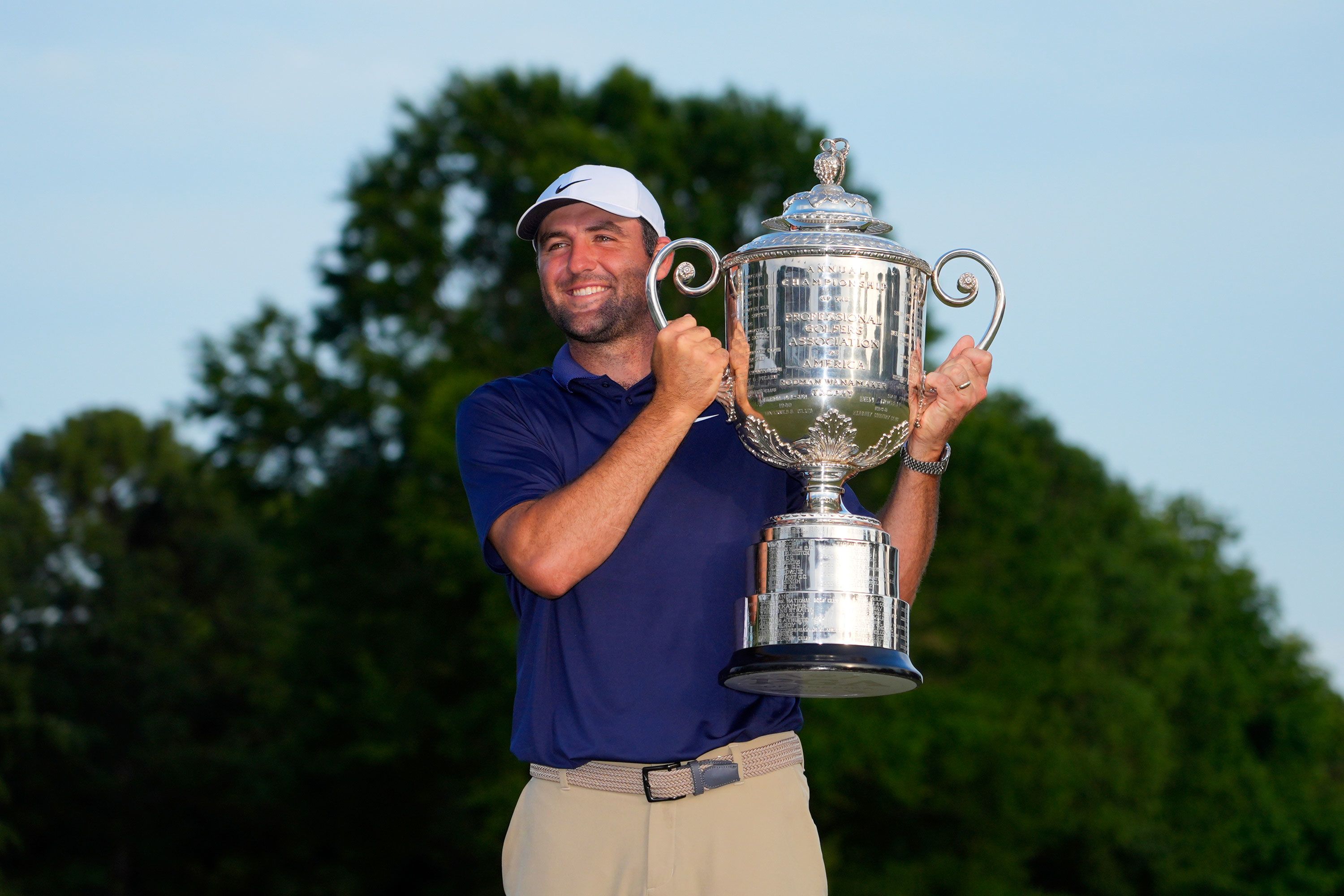
The arithmetic of the moment is striking. The previous English winner of the Wanamaker was Jim Barnes in 1916, when the championship was a match play event won at Siwanoy Country Club outside New York. The 109-year interval covers two world wars, the entire careers of Henry Cotton, Nick Faldo and Lee Westwood, and a half-century in which the European Tour was built and absorbed into the DP World Tour. Rai is the first English player in that span to walk off with the trophy.
He is also, on a separate count, the first British golfer of South Asian heritage to win a men's major. The route from a Wolverhampton driving range to Aronimink ran through a household where his father gave up his job to coach Aaron from age four, a mother who worked multiple jobs to keep the house afloat, and an older sister who took a part-time job at 14 or 15 to chip in. The hard-work strand was inherited too.
"I think a lot of that is from my upbringing," Rai said. "My dad was with me as I said of every day practice wise and he really instilled the importance of work and dedication. There was a lot of consistent messaging of hard work, and that was generally the environment that was at the house, and that was at the golf course as well."
Rai stopped short of presenting himself as a representative of anyone but himself, which fits the broader pattern of his time at Aronimink. He spoke about being a "foreign player playing here in America" and praised the Philadelphia fans for backing him "from the very start of the week." He drew no political conclusions, made no broader claim about diversity in golf, and offered no soundbite about being a role model.
"I don't know what all of that represents or how it's going to come across, but all I can say is I'm very proud to be a mix of all of them," Rai said.
That is, by his standards, a statement. The 109-year wait belongs to England. The man who ended it belongs to several places at once.

---
*Originally published on [Golf News Global](https://golfnews.global/article/aaron-rai-heritage-english-indian-kenyan-pga-championship-2026). Visit for full coverage.*