Heading into the 2026 PGA Championship, the consensus on Aronimink was almost unanimous. The Donald Ross design — long, tree-lined, recently softened by a tree-removal program that opened up sight lines — was going to reward distance. Bombers were going to gouge it out of the rough and figure out par fours from a hundred yards or less. Anyone trying to thread a small ball into the fairways was, in theory, going to be left behind.
Rory McIlroy said as much at his Tuesday press conference. Asked about the strategy off the tee, he was direct. There wasn't one, really. You bombed it and worked it out from there.
That framing held through Thursday and Friday. Aldrich Potgieter charged into co-lead through 36 holes on the back of an enormous driver. Chris Gotterup, one of the longest hitters on tour, posted a championship-low 65. Jon Rahm and Bryson DeChambeau, the two strongest power players in the field, hit some of the most spectacular drives of the week. The math, on the surface, was producing what the math was supposed to produce.
And then Aaron Rai walked the back nine on Sunday.
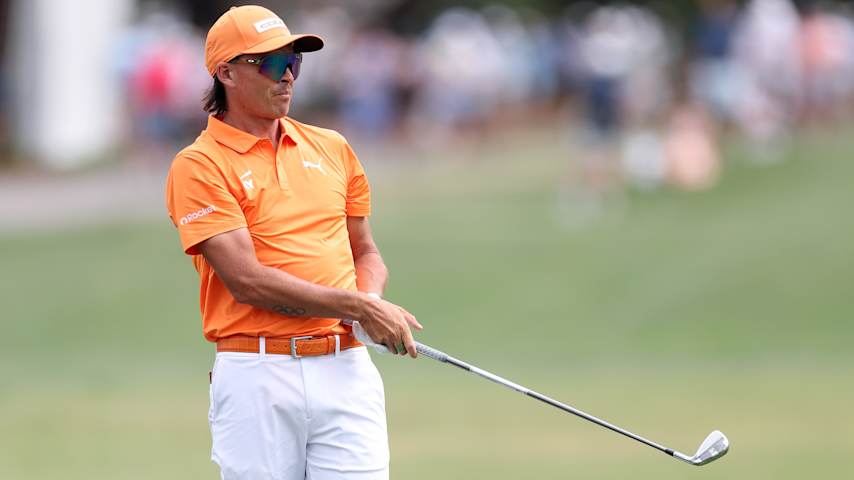
Trey Wingo's reading of the week, published on his "Straight Facts Homie" podcast on the Wingo Network on Monday, framed it cleanly. Rai, a 31-year-old from Wolverhampton with a single previous PGA Tour win (the 2024 Wyndham Championship), did the exact opposite of what everyone said you had to do at Aronimink. He played small ball. He hit fairways. He took the percentages. He used iron covers and wore two gloves — visual cues that have long marked him out as a craftsman first and a power hitter a distant second.
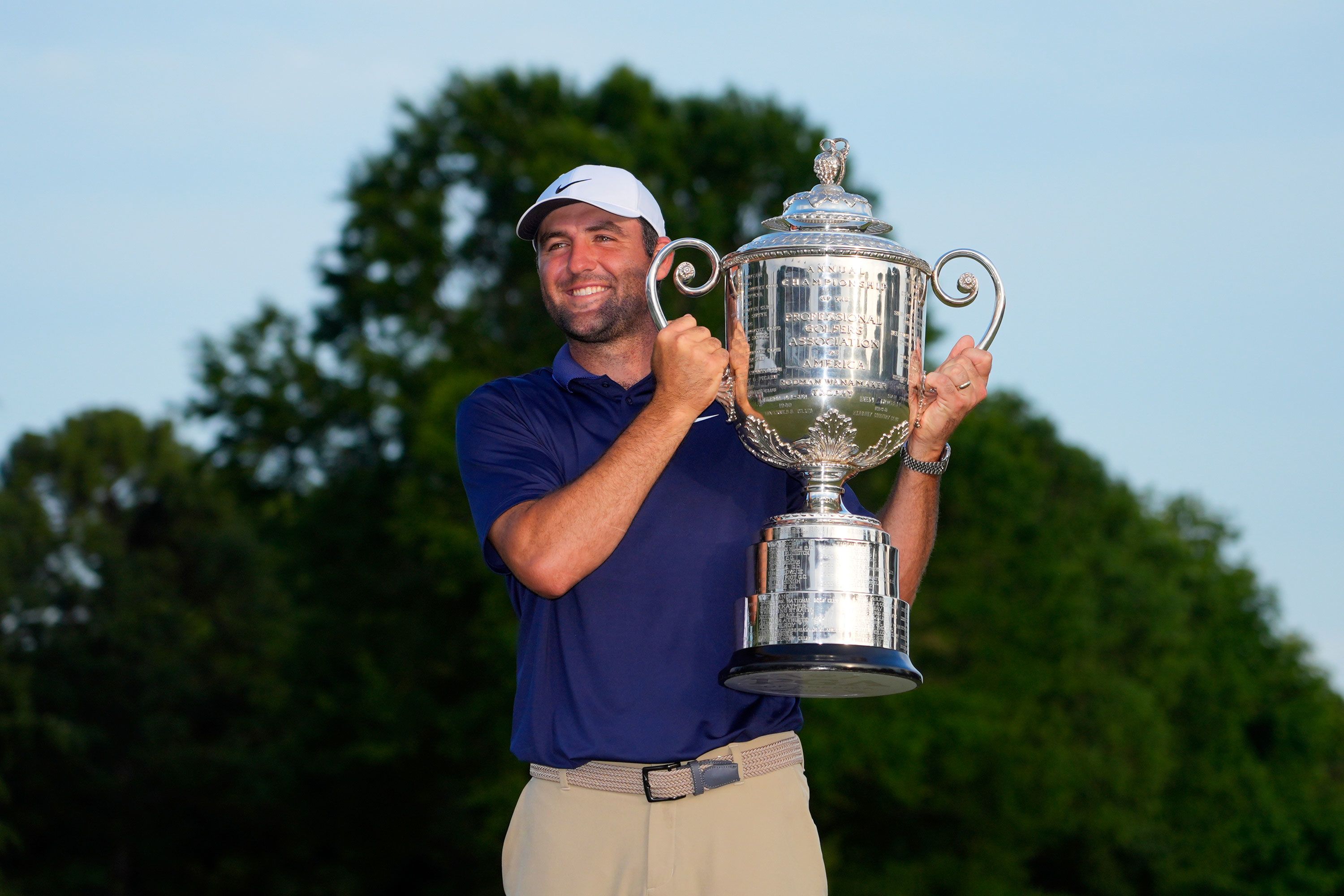
Then he closed at six-under across his final 10 holes of a major championship, on a course that had spent four days punishing nearly everyone who tried to force the issue. That stretch did not just win him the Wanamaker Trophy. It rewrote the live operating manual for the venue.
What Rai actually did with the bunker on 13 and the five-iron approach on 16 has been broken down separately in our anatomy of his closing nine. What is worth underlining here is the macro point. Aronimink, like a number of restored Ross designs, rewards the player who understands which side of the fairway to miss to, which slopes to feed approaches into, and which pin positions are mathematically not worth attacking under the prevailing wind. None of that was visible in the pre-tournament conversation, which was almost entirely a debate about driving distance.
Rai was not alone in proving the point. Justin Rose's 65 on Friday was a positional clinic. Kurt Kitayama's 63 on Sunday — equalling the PGA Championship final-round record — was a more aggressive variation on the same template, with an emphasis on iron-play numbers rather than raw distance. Matti Schmid, the German major debutant, finished inside the top five on a week where he was outdriven on most holes by the field.
The bombers' template did not fail at Aronimink. Several long hitters contended, and Potgieter is a serious major championship threat going forward. But the bombers' template was not the only template. By Sunday evening, the line that Aronimink was simply a brute test of distance had quietly evaporated.
It is also a useful corrective heading into the rest of the major championship season. The US Open at Shinnecock Hills next month will not reward indiscriminate bombing. Rai's win functions as a reminder that course-management instincts and reliable iron play — the unfashionable skills of the major championship era — still produce trophies. The most important shot of the 2026 PGA Championship may not have been a 320-yard drive. It may have been a five-iron struck out of position management rather than bravado, on a back nine that quietly rebuilt expectations for what wins majors in 2026.
---

*Originally published on [Golf News Global](https://golfnews.global/article/aaron-rai-aronimink-bomber-myth-strategy-pga-championship-2026-trey-wingo-analysis). Visit for full coverage.*